
Rubber Dampers and Grommets: A Vibration Control Selection Guide for Machinery and Electronics
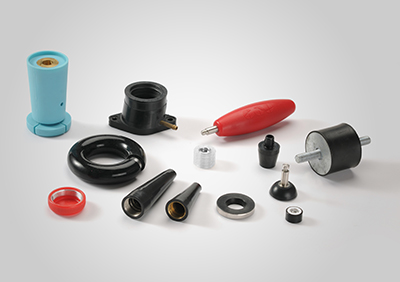
A rubber damper is a molded rubber component that sits between a vibrating machine, motor, or panel and its mounting surface, reducing the vibration energy transferred between them. A rubber grommet is a molded rubber insert that lines a hole so a cable, pipe, fastener, or sub-assembly passes through without conducting vibration into the surrounding structure. Both are made to order, and both are specified by hardness, dimensions, color, and physical properties rather than selected from a shelf.
If you are at the start of a vibration project, the real decision is not which brand to buy, but which format, which compound, and which hardness to specify. This guide is written for engineers, product designers, and procurement teams working on industrial machinery and electronic equipment. It explains what dampers and grommets do, how they differ from neighbouring parts such as washers, gaskets, seals, and o-rings, how material choices such as NR, NBR, EPDM, and silicone affect damping behaviour and environmental resistance, and how to convert a vibration complaint into a purchase-ready specification.
Problem Definition: Why Vibration Issues Are Often Solved with the Wrong Part
Vibration seldom announces itself as a vibration problem. In practice it surfaces as a noise complaint from an end user, a bracket that cracks in the field, fasteners that need re-torquing at every service visit, a cable that wears through at a panel opening, or an electronic enclosure that fails earlier than its duty cycle suggests. Because the symptom appears far from the cause, the first fix is usually mechanical: tighten the fastener, add a metal brace, or fit a general-purpose gasket. The vibration path itself is left untouched.
Rubber isolates vibration only when three conditions are satisfied at the same time. The part geometry has to match the load path, the compound has to survive the operating environment, and the stiffness of the rubber has to suit the frequency and amplitude involved. Miss any one of these and the part behaves as a rigid spacer that transmits vibration and eventually fails.
- Treating all small rubber parts as interchangeable. A sealing, waterproof, or dustproof grommet keeps contaminants out of a panel opening. A vibration or damping grommet is specified to isolate movement. These are separate product categories and they solve different problems.
- Choosing the compound out of habit. NBR is a common default because it appears in so many oil-contact seals, yet an outdoor, ozone-exposed, or washdown application usually points to a different compound family.
- Over-specifying hardness. A harder rubber pad feels more solid, but it transfers more vibration. Isolation generally comes from a softer, correctly shaped part working within its design deflection.
- Designing the mount after the geometry is frozen. Dampers and grommets need thickness, clearance, and a defined compression direction. If these are not reserved on the drawing, the part ends up crushed against a hard stop and stops isolating.
- Confusing isolation with sealing. A gasket, seal, or o-ring may sit in the same assembly, but its job is to contain fluid or pressure, not to absorb dynamic movement.
Industry Background: Why Vibration Control Components Are Getting More Attention
Demand for molded rubber isolation and sealing components is growing alongside the equipment that uses them. The global industrial rubber product market was valued at USD 28.28 billion in 2024 and is projected to reach USD 45.19 billion by 2034, according to Zion Market Research. Within that category, the EPDM rubber market was estimated at USD 10.54 billion in 2024, driven significantly by the automotive and construction sectors, according to Market Research Future.
Silicone-based demand is moving faster than the category average. The global liquid silicone rubber market was estimated at USD 2.9 billion in 2024, with a projected CAGR of 9.6% through 2033 (Acumen Research and Consulting), and the automotive segment accounted for a 34.1% revenue share of that market in 2023 (Grand View Research). The medical grade silicone rubber market was valued at USD 7.95 billion in 2024 and is expected to reach USD 14.2 billion by 2035 (Market Research Future).
Published market sizes for rubber products differ between research houses because some include tires and some exclude them. These figures are best read as direction of travel rather than as an exact procurement baseline.
Supply geography matters just as much as demand. China exports approximately EUR 4.01 billion in rubber products to the European Union annually, which means a buyer specifying a damper or grommet is almost always choosing between domestic molding capacity and an Asian supply chain. That choice is usually settled by three requirements: dimensional consistency, material documentation, and repeatability across production runs.
Three published standards appear repeatedly in specifications for these parts. ASTM D2000 is the primary classification system for rubber products in automotive and industrial applications. ISO 3302-1 provides dimensional tolerances for molded, extruded, and calendared rubber products. FDA 21 CFR 177.2600 specifies the requirements for rubber articles intended for repeated use in food contact applications.
Detailed Solution: Where Dampers, Grommets, and Their Neighbours Fit
Rubber dampers
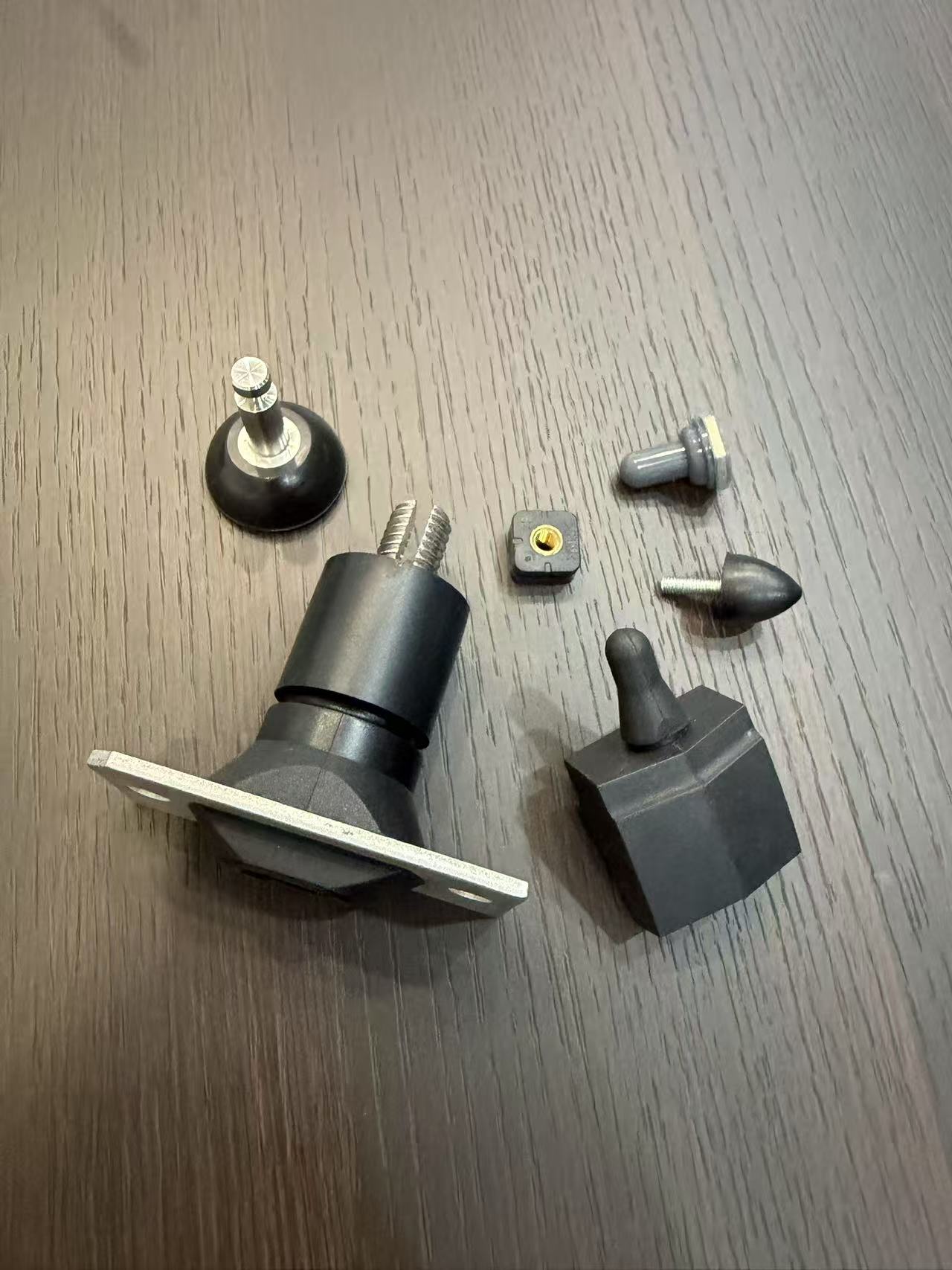
A rubber damper is defined less by its shape than by its position in the assembly: it is the compliant element between a vibration source and the structure it is bolted to. The category splits into four application types: machinery vibration dampers, automotive rubber dampers, electronic equipment dampers, and pipe or vibration mount dampers. All four are available as custom-made parts, with hardness, dimensions, color, and physical properties specified by the buyer.
Available compounds for rubber dampers include EPDM, NBR (Buna-N), NR, CR (Neoprene), FKM (Viton), SBR, HNBR, silicone rubber (SiR / VMQ), and medical grade silicone rubber. Typical industries served are automotive, industrial, machinery, energy, medical, food, and electrical.
Rubber grommets
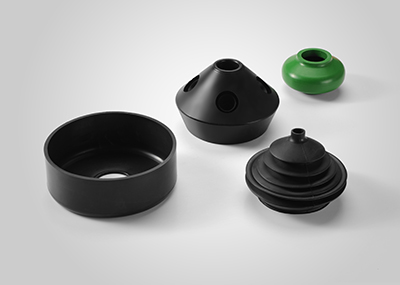
Rubber grommets serve three distinct functions, and the function should be named in the specification before any drawing is issued. Wire and cable protection grommets guard conductors against chafing at a sharp panel edge. Sealing, waterproof, and dustproof grommets close the gap around a cable entry so that water, dust, or washdown spray cannot reach the interior. Vibration and damping grommets are specified to decouple a cable, bracket, or sub-assembly from the panel it passes through.
Grommets use the same material family as dampers: EPDM, NBR / Buna-N, NR, CR / Neoprene, FKM / Viton, SBR, HNBR, silicone rubber, and medical grade silicone rubber. They are intended for automotive, industrial, machinery, energy, medical, food, and electrical industries.
Washers, gaskets, seals, and o-rings: adjacent parts, different jobs
Vibration problems are often tangled with sealing problems, so it helps to know where the boundary sits.
- Rubber washers are grouped as sealing washers, vibration damping washers, insulating washers, waterproof washers, and cushion washers, in EPDM, NBR (Buna-N), and silicone rubber, for the electrical, food, medical, and automotive industries.
- Rubber gaskets cover oil-resistant and high-temperature categories, along with chemical-resistant, low-temperature / cryogenic, food-grade / FDA-approved, medical-grade, and high-pressure / flange gaskets, in NBR, EPDM, FKM, HNBR, silicone, and other materials.
- Rubber seals include hydraulic, pneumatic, oil / engine, high-temperature, low-temperature / cryogenic, chemical-resistant, food-grade / FDA-approved, medical-grade, and high-pressure types.
- Rubber o-rings include static seal, dynamic seal, hydraulic, pneumatic, food-grade, and medical-grade versions, in EPDM, NBR, silicone rubber, FKM (Viton), and medical grade silicone rubber.
A practical rule for early-stage projects: if the part has to stop fluid, it is a gasket, seal, or o-ring. If it has to stop movement, it is a damper, a vibration damping washer, or a damping grommet. Some parts do both, but they are specified to one primary function.
Material Options: NR, NBR, EPDM, Silicone, and the Rest
Material selection is the point where most specifications stall, because the same compound can be right for one damper and wrong for the next one in the same machine. The table below summarises where each compound family is commonly selected and what to watch for on a vibration part specifically. The statements are general industry practice and should be confirmed against the actual operating environment of your project.
| Compound | Commonly selected where | Practical note for damping and isolation parts |
|---|---|---|
| NR (Natural Rubber) | General industrial vibration mounts and cushions; indoor, dry service | Widely chosen for its resilience and dynamic behaviour; generally not the first choice where oil or sustained ozone exposure dominates |
| NBR / Buna-N | Lubricant, fuel, and hydraulic fluid contact; machinery and automotive assemblies | Commonly specified where oil resistance is the priority; weather and ozone exposure is usually a design consideration |
| EPDM | Outdoor and weather-exposed equipment, water and steam contact, construction and automotive exterior | Frequently used where weathering, ozone, and water resistance drive the choice |
| Silicone rubber (SiR / VMQ) | Wide temperature service ranges, electrical and electronic assemblies, clean applications | Often selected where electrical insulation or temperature range matters more than oil resistance |
| Food-grade silicone rubber | Equipment with repeated food contact | Specification is normally tied to food contact requirements such as FDA 21 CFR 177.2600 |
| Medical grade silicone rubber | Medical devices and components, plus related clean applications | Chosen where the part must meet medical-grade material expectations rather than general industrial ones |
| CR / Neoprene | General-purpose industrial applications | A balanced option where moderate oil, weather, and mechanical demands coexist |
| FKM / Viton | High-temperature and chemically aggressive service | Typically reserved for the most demanding exposure in the assembly |
| HNBR | Demanding automotive and industrial service combining heat and oil | Used where standard NBR is considered insufficient for the duty cycle |
| SBR | General-purpose, cost-sensitive applications | Commonly used for non-oil environments where a straightforward compound is enough |
For vibration parts, geometry and hardness usually matter more than the compound at the first design pass. The compound becomes decisive later, because a material that hardens, swells, or cracks in service will lose its isolating behaviour long before the machine reaches its design life.
Step-by-Step Breakdown: From Vibration Complaint to Purchase-Ready Specification
The sequence below is written for teams that have identified a vibration problem but have not yet fixed a specification. Working through it in order prevents the most expensive outcome: a correctly molded part that solves the wrong problem.
- Write the vibration problem down in measurable terms. Record where the vibration is observed, which surface it travels through, whether the movement is continuous or intermittent, and which direction dominates. Even an approximate description of the motion is enough to choose between a compressive pad and a shear-loaded mount.
- Decide which format solves it. If the vibration passes between two bolted surfaces, the answer is normally a rubber damper or a vibration damping washer. If it passes through an opening in a panel or chassis, the answer is normally a vibration or damping grommet. If the problem is contamination at that opening rather than movement, a sealing grommet is the correct part.
- Define the environment envelope. List temperature range, oil or chemical contact, ozone and ultraviolet exposure, moisture or washdown, food or medical contact requirements, and whether electrical insulation is needed. This list, not habit, should drive the compound shortlist.
- Fix compound, hardness, and dimensions together. These three variables interact. All damper, grommet, washer, gasket, seal, and o-ring ranges discussed here are custom-made with hardness, dimensions, color, and physical properties set by the buyer, so the specification can be matched to the load path rather than to the nearest catalogue size.
- Validate with a physical sample. Sampling is the standard validation step for molded rubber parts, because deflection behaviour and fit cannot be confirmed from a drawing alone. A sample also confirms that the compound behaves as expected in the real environment.
- Freeze the specification and qualify the supplier. The technical advantages that matter at this stage are dimensional precision for automated assembly, sealing and vibration damping performance, service life under harsh environments, and resistance to heat, oil, ozone, and corrosion. These are the criteria that keep a part from becoming a rework item after ramp-up.
Use Cases: Matching the Part to the Application
Industrial machinery and rotating equipment
Machinery vibration dampers are commonly placed between motors, pumps, compressors, or gearboxes and the frame or floor they are bolted to. The same machines usually need grommets at control panel entries, where cable protection and sealing grommets guard conductors against a sharp edge.
Automotive and transport equipment
Automotive rubber dampers address vibration in brackets, sub-frames, and accessory mounting points, while grommets manage wiring harness pass-throughs through body panels. Rubber molded products for automotive use frequently combine heat, oil, and vibration exposure, which is why HNBR and silicone grades appear alongside EPDM and NBR in these assemblies.
Electronic equipment and control cabinets
Electronic equipment dampers are specified where fans, drives, transformers, or moving media inside an enclosure generate vibration that would otherwise reach sensitive electronics or the mounting surface. Grommets in the same enclosure handle cable entry, strain relief, and dust protection, and insulating washers are sometimes used where electrical isolation is also required.
Pipe, duct, and vibration mount applications
Pipe and vibration mount dampers are used where pipework or ducting transmits movement into a structure. Their geometry differs from machine mounts because the load direction is often lateral rather than vertical.
Food, medical, and hygienic equipment
Where equipment comes into repeated contact with food, food-grade silicone rubber and FDA-approved gasket and seal categories apply, with reference to FDA 21 CFR 177.2600. Medical-grade silicone rubber is used for medical components, and Longrun Rubber has the capability to produce FDA and medical-grade rubber components.
These application scenarios are common in the United States, Germany, Australia, the United Kingdom, France, Switzerland, Spain, Turkey, Canada, Italy, Mexico, Portugal, and Russia.
Comparison Table: Damper and Grommet Categories Side by Side
The two tables below list the categories documented in the current product specification, so that a project team can match a vibration problem to a part family before requesting a drawing.
| Damper category | Where it is mounted | Materials available | Industries named in specification |
|---|---|---|---|
| Machinery Vibration Damper | Between a machine or rotating equipment and its frame or floor | EPDM, NBR, NR, CR, FKM, SBR, HNBR, silicone rubber, medical grade silicone rubber | Machinery, industrial, energy, automotive |
| Automotive Rubber Damper | Vehicle brackets, sub-assemblies, and accessory mounts | EPDM, NBR, NR, CR, FKM, SBR, HNBR, silicone rubber, medical grade silicone rubber | Automotive, industrial |
| Electronic Equipment Damper | Inside or beneath enclosures housing fans, drives, and electronics | EPDM, NBR, NR, CR, FKM, SBR, HNBR, silicone rubber, medical grade silicone rubber | Electrical, industrial, medical |
| Pipe / Vibration Mount Damper | Pipework, ducting, and structural mounting points | EPDM, NBR, NR, CR, FKM, SBR, HNBR, silicone rubber, medical grade silicone rubber | Industrial, energy, machinery |
| Grommet category | Primary function | Materials available | Industries named in specification |
|---|---|---|---|
| Vibration / Damping Grommet | Decoupling a cable, bracket, or sub-assembly from the panel it passes through | EPDM, NBR / Buna-N, NR, CR / Neoprene, FKM / Viton, SBR, HNBR, silicone rubber, medical grade silicone rubber | Automotive, industrial, machinery, energy, medical, food, electrical |
| Sealing / Waterproof / Dustproof Grommet | Closing a panel opening against water, dust, and washdown spray | EPDM, NBR / Buna-N, NR, CR / Neoprene, FKM / Viton, SBR, HNBR, silicone rubber, medical grade silicone rubber | Automotive, industrial, machinery, energy, medical, food, electrical |
| Wire / Cable Protection Grommet | Protecting conductors against chafing at a sharp edge | EPDM, NBR / Buna-N, NR, CR / Neoprene, FKM / Viton, SBR, HNBR, silicone rubber, medical grade silicone rubber | Automotive, industrial, machinery, energy, medical, food, electrical |
Frequently Asked Questions
What customization options are available for rubber dampers and grommets?
Rubber dampers and rubber grommets are both custom-made products. The variables a buyer can set are hardness, dimensions, color, and physical properties. On the damper side, the available application categories are machinery vibration dampers, automotive rubber dampers, electronic equipment dampers, and pipe or vibration mount dampers. On the grommet side, the available categories are wire and cable protection grommets, sealing / waterproof / dustproof grommets, and vibration / damping grommets. Compound options across both families include EPDM, NBR / Buna-N, NR, CR / Neoprene, FKM / Viton, SBR, HNBR, silicone rubber, and medical grade silicone rubber.
Do rubber dampers and grommets have to meet specific standards?
Three published standards are commonly referenced when these parts are specified. ASTM D2000 is the primary classification system for rubber products in automotive and industrial applications. ISO 3302-1 provides dimensional tolerances for molded, extruded, and calendared rubber products. FDA 21 CFR 177.2600 specifies the requirements for rubber articles intended for repeated use in food contact applications. Where food or medical contact applies, food-grade silicone rubber and medical grade silicone rubber grades are used, and Longrun Rubber has the capability to produce FDA and medical-grade rubber components.
What should buyers check when comparing rubber dampers suppliers in China?
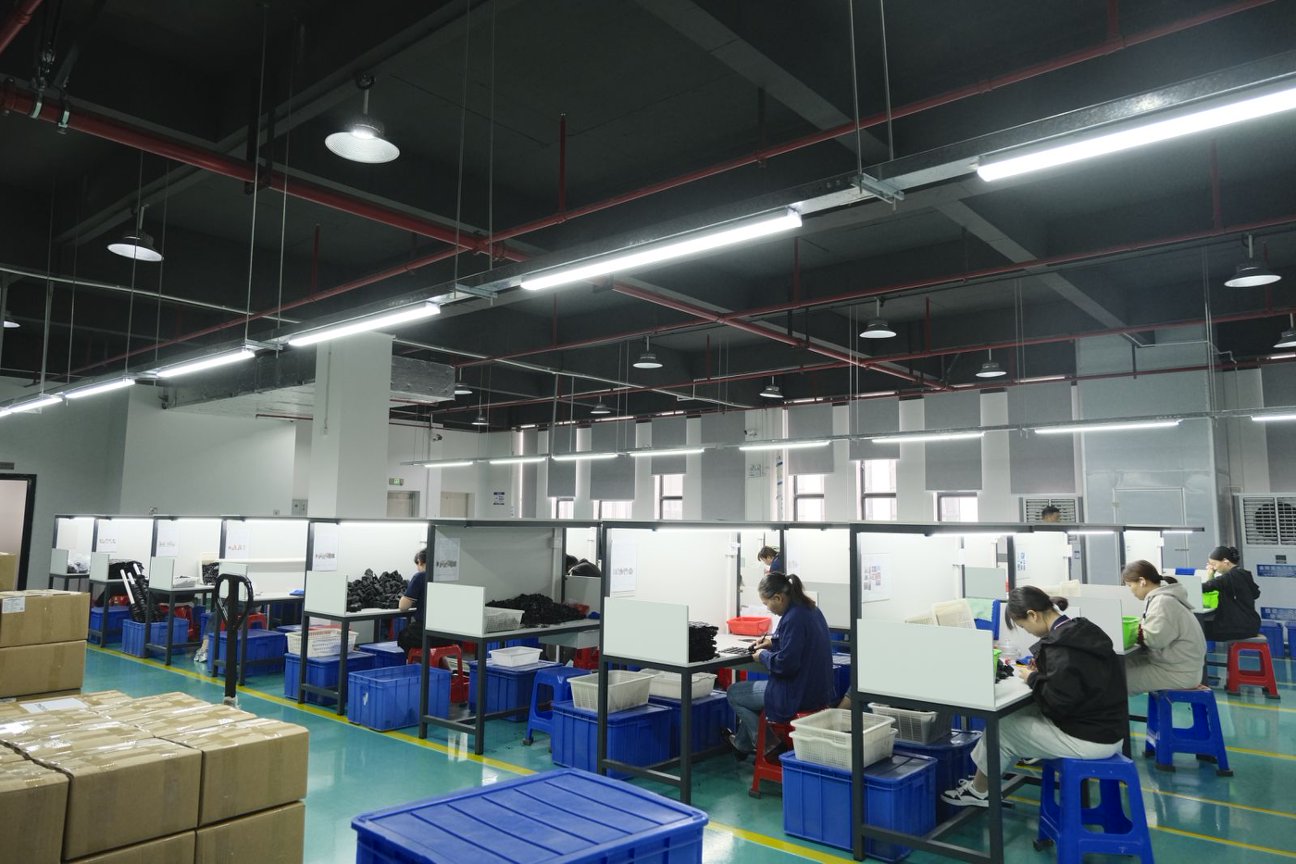
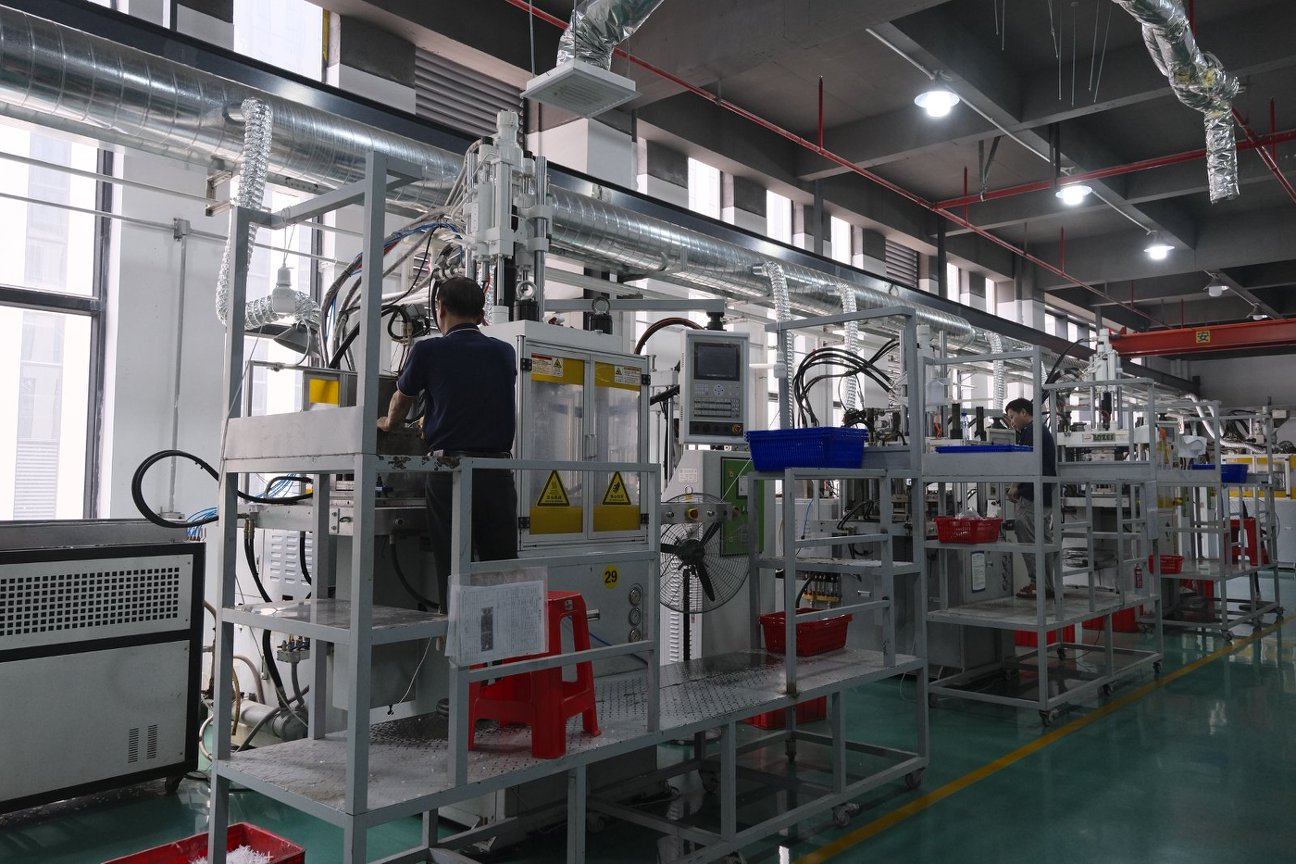
Check four things in order. First, whether the supplier molds to a controlled specification, since hardness and dimensions are the variables that decide whether a damper isolates or transmits vibration. Second, whether the supplier can explain the compound choice for your environment instead of defaulting to one material. Third, whether production and inspection are handled in-house and can be described in concrete terms. Fourth, whether the supplier serves industries comparable to yours. Longrun Rubber Products (Huizhou) Co., Ltd. was established in 2005, operates a 10,000 square meter manufacturing facility with approximately 120 staff and a 20-engineer R&D team, exports 80% of its sales, and produces custom molded rubber products used in automobile, mechanism, home appliances, consumer electronics, medical, food, and telecommunication applications.
Can EPDM dampers and grommets be sampled before mass production?
Yes. Sampling is the normal validation route for custom molded parts, because deflection under load, fit at the mounting point, and material behavior in the real environment cannot be confirmed from a drawing alone. EPDM, NBR, NR, CR, FKM, SBR, HNBR, and silicone rubber are all available for custom-made damper and grommet production, and sample requests are accepted through Longrun Rubber's contact channel before a production commitment is made.
How do I start a specification review for a vibration control part?
The most efficient starting point is to send the application description, the mounting or panel geometry, and the environment conditions in a single message, and to state which part family you believe is needed. From there, hardness, dimensions, color, and physical properties can be fixed against the actual load path rather than against the nearest available size. Longrun Rubber's team can be reached at tommyliu@longrunrubber.com or hang@longrunrubber.com, by phone or WhatsApp at +86 13006697998, or through the website at www.longrunrubber.com.
Conclusion: Specify the Function Before the Part
Vibration control in industrial machinery and electronics is decided long before a purchase order is issued. The useful sequence is to name the function, choose the format, define the environment, and only then fix the compound, hardness, and dimensions. A machinery vibration damper, an automotive rubber damper, an electronic equipment damper, or a pipe mount damper each answer a different mounting question, just as a vibration grommet answers a different problem from a sealing grommet.
Material choice follows the same logic. NR, NBR, EPDM, silicone, CR, FKM, SBR, and HNBR are all available for custom molded damper and grommet production; the correct one is the compound that still behaves elastically at the end of the equipment's service life, not the one that performs best on the first day. Because all of these parts are custom-made, the specification can be written around the application instead of around a limited catalogue.
Next Step: Sample, Drawing Review, or Quotation
Send your mounting geometry, environment conditions, and target quantities, and the team will come back with a compound and hardness recommendation plus a sample or quotation path. The full product and capability overview is available in the downloadable catalogue.
Download the catalogue: Longrun Rubber product and capability brochure (PDF)
Email: tommyliu@longrunrubber.com / hang@longrunrubber.com | Tel / WhatsApp: +86 13006697998 | Website: www.longrunrubber.com
Longrun Rubber Products (Huizhou) Co., Ltd. — 7# factory building, No. 27 Songbailing Avenue, The start-up area of China-South Korea Huizhou Industrial Park, Zhongkai High-tech Zone, Huizhou, Guangdong, 516302, China.
Have Questions or Need More Details?
Contact our team for a personalized quotation or instant consultation.
Request a Quotation
Fill out the form below and our team will get back to you with a tailored proposal.
WhatsApp Direct Chat
Prefer to chat in real-time? Message us on WhatsApp for instant assistance & quick answers.
- Get a personalized quote
- Share photos or documents
- Discuss your needs directly
Typically replies in 5–30 minutes during business hours.