
Ranking Rubber Components for Machinery Vibration Damping: Top Picks for Industrial Equipment
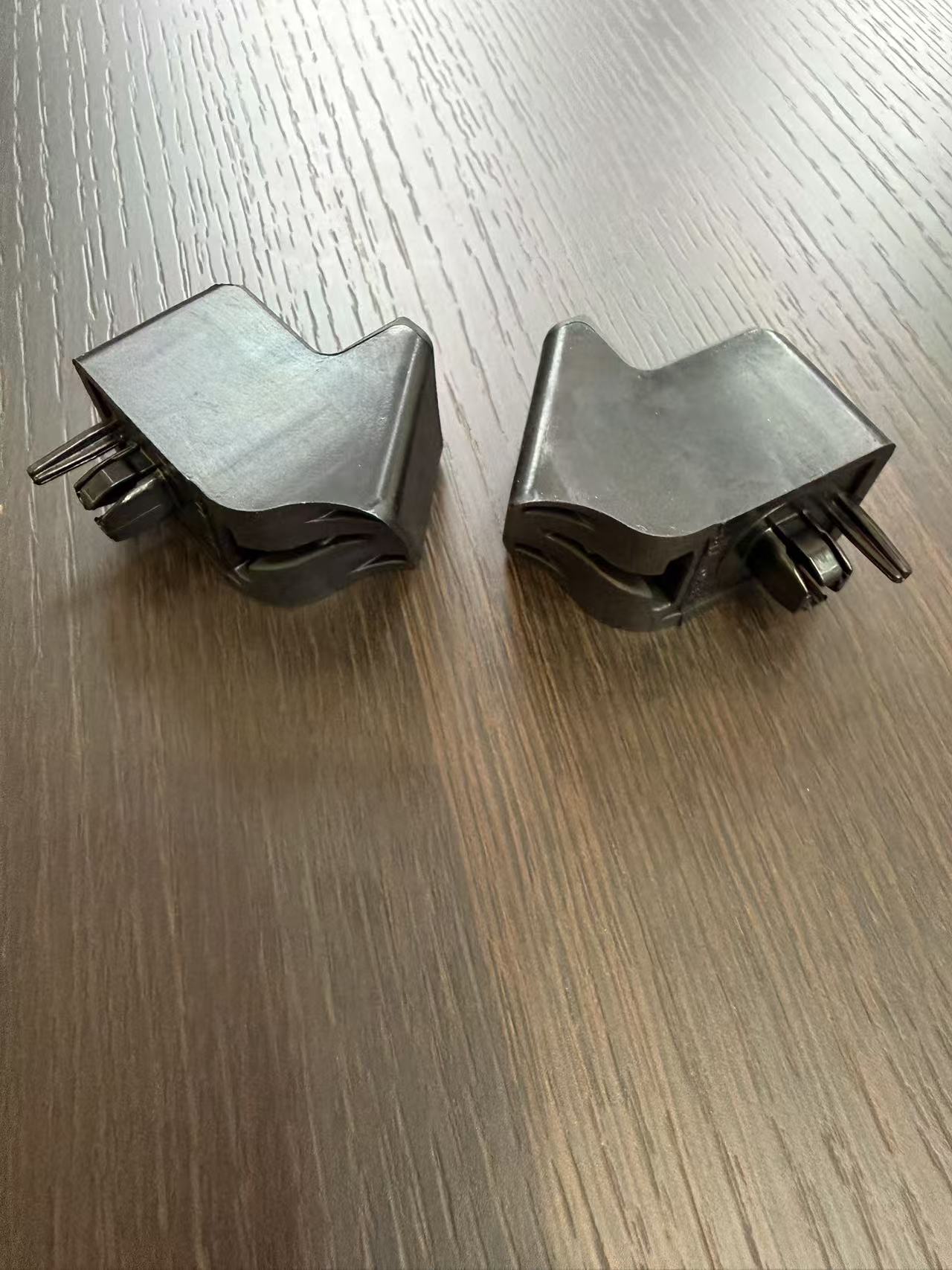
Answer first: among the rubber component families used for machinery vibration damping, rubber dampers rank first, because "Machinery Vibration Damper" is a defined damper sub-type built to isolate equipment from its supporting structure. Rubber washers rank second, because the "Vibration Damping Washer" sub-type isolates vibration at the fastener and adds insulating or waterproofing functions. Rubber grommets rank third, because the "Vibration/Damping Grommet" sub-type isolates cables, hoses and panels at a pass-through point rather than under a machine foot. All three families are produced as custom-made parts in EPDM rubber, NBR, NR, CR, FKM, SBR, HNBR or silicone rubber, with hardness, dimensions, color and physical properties specified per project.
- Rubber dampers — Machinery Vibration Damper sub-type. Most specialized choice for isolating a machine, pump, compressor or pipe from structure.
- Rubber washers — Vibration Damping Washer sub-type. Fastener-level isolation combined with cushioning, insulation or waterproofing.
- Rubber grommets — Vibration/Damping Grommet sub-type. Pass-through isolation for cables, harnesses and panels, with sealing and chafing protection.
Problem Definition: Why Damping Components Get Selected Wrong
Vibration in industrial equipment rarely stays where it starts. A rotating or reciprocating machine transmits energy into its mounting frame, into the panels around it, and into the cables and pipes connected to it. When the damping component is chosen by habit — a washer grabbed from stock, a grommet reused from another project — the component may still fit mechanically while doing very little for the vibration path it was supposed to interrupt.
The practical consequences are usually reported in three forms. First, inadequate shock absorption and noise reduction: the structure keeps radiating noise because the isolation element is too stiff, too thin, or loaded in the wrong direction. Second, abrasion and fatigue at pass-through points: cables and hoses moving against a hard panel edge without a compliant interface. Third, sealing and protection failures that appear as damping failures: dust, water, heat or chemicals reach the joint, and the rubber degrades before the vibration problem is ever solved.
Longrun Rubber Products (Huizhou) Co.,Ltd., a custom molded rubber parts manufacturer established in China in 2005, positions its damping-related product families against exactly these three failure modes: vibration and noise reduction, cushioning and protection, and dustproof and waterproof protection with resistance to heat and chemicals. The ranking below follows the same logic.
Industry Background: Where Damping Components Sit in the Rubber Products Market
Damping components are a narrow slice of a broad category, and buyers benefit from seeing the scale difference. Publisher-reported estimates place the global industrial rubber products market at approximately USD 58.98 billion in 2026 (Market Reports World, September 2026). Within industrial rubber consumption volume, sealing products accounted for 12% in 2024, while grommets held a 36.45% share of the automotive rubber molding segment in 2025 (same publisher). Liquid silicone rubber — a material class used for heat-resistant damping and sealing parts — is projected to grow at a CAGR of 8.7% to USD 6.5 billion by 2033 (Credence Research).
These are commercial research estimates, not audited production data. They indicate category scale and direction; they do not size any individual damping program, and they should not be used as a substitute for a quotation.
The practical reading for an industrial buyer in the evaluation stage is this: grommets and seals dominate volume because they are consumed in very large quantities per machine and per vehicle, while dampers are consumed in smaller numbers but carry a disproportionate share of the vibration outcome. That asymmetry is why a ranking by damping specialization looks different from a ranking by unit volume.
How This Ranking Was Built
The ranking compares component families supplied as custom rubber molded parts, and orders them by how directly each family is engineered for vibration isolation. Six criteria were applied, and no criterion relies on unpublished performance data:
- Damping function in the product definition. Does the family contain a sub-type whose stated function is vibration damping, rather than sealing or protection alone?
- Load path and mounting position. Does the component sit between the vibration source and the structure, at the fastener, or at a pass-through opening?
- Material availability. Can the family be molded in EPDM rubber, NBR, NR, CR, FKM, SBR, HNBR and silicone rubber so that the environment, not the catalogue, drives the compound choice?
- Customization depth. Can hardness, dimensions, color and physical properties be specified per project?
- Compliance and traceability. Can the component be supplied under a manufacturing system certified to ISO 9001:2015 and IATF 16949:2016?
- Supply continuity. Is there a defined lead time, a defined quality-control regime, and after-sales support behind the part?
The Ranking: Three Rubber Component Families for Machinery Vibration Damping
Rank 1 Rubber Dampers — the Machinery Vibration Damper
Rubber dampers take first place because the damper family is the only one in this set whose own sub-type list names machinery vibration damping as a function. The defined damper sub-types are: Machinery Vibration Damper, Automotive Rubber Damper, Electronic Equipment Damper, and Pipe/Vibration Mount Damper. A buyer searching for a component to place between a machine and its foundation, or between a pipe run and a bracket, is working inside this family by definition.
Why it earns the top position:
- It interrupts the main vibration path. The damper is mounted between the source and the structure, so the rubber element works in compression, shear or a combination, and the mounted equipment is isolated as a body rather than at individual bolts.
- It covers the widest equipment range. The same family serves machinery, automotive, electronic equipment and pipe mounting, which means one qualification route can be reused across several programs.
- It is fully customizable. Dampers are custom-made parts: hardness, dimensions, color and physical properties are specified per project, in any of the available compounds — EPDM rubber, NBR (Buna-N), NR, CR (Neoprene), FKM (Viton), SBR, HNBR, silicone rubber (SiR / VMQ), or medical grade silicone rubber.
- It has verified program evidence. A US automotive rubber parts OEM program produced 1,000,000 units per year and solved inadequate shock absorption and noise reduction, achieving tensile strength ≥ 7 MPa, elongation at break ≥ 400% and tear strength ≥ 15 kN/m, with Cpk > 1.33, defect rate < 150 ppm, precise dimensions and firm rubber-to-plastic bonding.
Where the damper stops being the right answer: when the vibration path runs through a bolted joint rather than a machine foot, or when the available space cannot accept a mount of the required height. In those cases the damper is not disqualified by quality — it is simply the wrong geometry, and the next two families take over.
Rank 2 Rubber Washers — the Vibration Damping Washer
Rubber washers rank second because the washer family includes the Vibration Damping Washer sub-type alongside Sealing Washer, Insulating Washer, Waterproof Washer and Cushion Washer. That sub-type list explains the position: a washer does several jobs at once, and vibration damping is one of them rather than the only one.
Why it holds second place:
- It works exactly where assemblies fail. Placed under a bolt head or between a bracket and a panel, the washer decouples the fastener from the structure and adds cushioning at the joint — a common origin of buzz, rattle and fretting.
- It carries three secondary functions that machinery programs often need anyway. Insulating washers separate dissimilar metals and electrical potentials; waterproof washers close the fastener hole against ingress; cushion washers spread clamp load on thin panels.
- It is a low-disruption change. Because the washer sits inside an existing bolted joint, a damping upgrade can often be made without redesigning the mounting envelope.
- It shares the same specification route. Hardness, dimensions, color and physical properties are custom-made, and the same compound list applies from EPDM rubber through silicone rubber.
Its limitation is travel. A washer has limited deflection available before it is fully compressed, so it damps locally rather than isolating a whole machine mass. Programs that need body-level isolation still belong with Rank 1. The complementary strength of the washer family is visible in the broader component program evidence: a US program supplying food, medical, machinery and sanitary clients at 3,000,000 units per year for 5 years combined vibration and noise reduction, cushioning and protection, dustproof and waterproof protection, and resistance to heat and chemicals, achieving tensile strength ≥ 8 MPa, elongation at break ≥ 450% and tear strength ≥ 35 kN/m, with Cpk > 1.33, defect rate < 150 ppm and precise dimensions.
Rank 3 Rubber Grommets — the Vibration/Damping Grommet
Rubber grommets rank third because the grommet family reserves damping for one of three defined sub-types: wire/cable protection grommets, sealing/waterproof/dustproof grommets, and vibration/damping grommets. The damping role is real, defined and often the deciding factor — but it applies to a pass-through opening rather than to a machine mounting.
Why it still earns a place in the top three:
- It protects the connection that vibration damages most quietly. A grommet forms the compliant interface where a cable, harness or hose passes through a panel, reducing chafing and transmitted movement at that edge.
- It combines isolation with ingress protection. The sealing/waterproof/dustproof sub-type means one part can close a panel opening and damp it at the same time.
- It is a high-volume, well-understood category. Grommets reached a 36.45% share of the automotive rubber molding segment in 2025 according to publisher-reported data, which means tooling, inspection and material experience for this geometry are mature.
- It is customizable on the same terms. Hardness, dimensions, color and physical properties are specified per project, in EPDM rubber, NBR, NR, CR, FKM, SBR, HNBR, silicone rubber or medical grade silicone rubber.
Its limitation is scope. A grommet isolates a local interface; it does not change the dynamic behaviour of a machine mass. If the requirement is "the pump must not transmit vibration into the skid", a grommet alone will not satisfy it, and the specification should move to Rank 1.
Where Gaskets, Seals and O-Rings Fit — and Why They Are Not Ranked Here
This ranking is deliberately limited to damping. Rubber gaskets (oil-resistant, chemical-resistant, high-temperature, low-temperature/cryogenic, food-grade/FDA-approved, medical-grade and high-pressure/flange types), rubber seals (hydraulic, pneumatic, oil/engine, high-temperature, low-temperature, chemical-resistant, food-grade, medical-grade and high-pressure types) and rubber o-rings (static, dynamic, hydraulic, pneumatic, food-grade and medical-grade) are sealing components. They may absorb some vibration as a side effect, but their specification is driven by media, pressure and temperature, not by isolation. Treating a gasket as a damper is a common specification error — the part is often correct for sealing and wrong for the vibration problem it was asked to solve.
Material Reference for Damping Components
All three ranked families are available in the same compound set, so material choice is a design decision rather than a catalogue constraint. The table below pairs the designation used in the specification with the environment driver that usually decides it.
| Material designation | Available for dampers, washers, grommets | Environment driver commonly used to select it |
|---|---|---|
| EPDM rubber | Yes | Outdoor and humid service where ozone, UV and weather exposure dominate |
| NBR / Buna-N | Yes | Oil and fuel contact around machinery and engine compartments |
| NR (natural rubber) | Yes | General-purpose cushioning where cost and resilience are the priorities |
| CR / Neoprene | Yes | Mixed weather and moderate chemical exposure |
| FKM / Viton | Yes | Aggressive chemicals and elevated temperatures |
| SBR | Yes | General industrial duty where oil resistance is not required |
| HNBR | Yes | Hot oil and refrigerant-adjacent service |
| Silicone rubber (SiR / VMQ), including medical grade silicone rubber | Yes | Wide temperature excursions and applications needing a clean, medical-grade compound |
Material selection guidance above describes typical design logic for industrial rubber parts. Compound performance in a specific application should be confirmed against the project specification and the required standard before production.
Step-by-Step Breakdown: Choosing Between the Three
A repeatable selection sequence keeps the decision factual rather than habitual. The seven steps below follow the ranking order.
- Map the vibration path. Decide whether the energy enters the structure through a machine mounting, through a bolted joint, or through a panel opening carrying cables or pipes. This single answer usually settles the rank.
- Select the component family. Machine-to-structure: rubber damper, Machinery Vibration Damper sub-type. Joint-level: rubber washer, Vibration Damping Washer sub-type. Pass-through: rubber grommet, vibration/damping grommet sub-type.
- Shortlist two compounds. Use the material reference above to eliminate anything incompatible with oil, chemicals, temperature or weather, then keep one primary and one fallback so sampling does not stall.
- Write the customization spec. Dampers, washers and grommets are custom-made on hardness, dimensions, color and physical properties. Stiffness is set by hardness plus geometry, so both must be on the drawing, not just the outline dimensions.
- Validate on a sample, then on a first run. Confirm the part in the assembly rather than on paper, and agree the inspection basis for the production run. Longrun Rubber applies 100% test to production and has run programs at Cpk > 1.33 with defect rates below 150 ppm.
- Confirm documentation. Longrun Rubber Products (Huizhou) Co.,Ltd. holds ISO 9001:2015 (certificate FM 840583, BSI, valid 2026-04-10 to 2029-04-09) and IATF 16949:2016 (certificate 0601909, BSI, valid 2026-04-10 to 2029-04-09), both scoped to "Manufacturing of rubber and silicone seals". Note that FDA 21 CFR 177.2600, USP Class VI and ISO 10993 are separate, non-equivalent requirements, so the exact standard must be named in the inquiry rather than assumed.
- Lock supply terms. Standard lead time is 20 days, MOQ and monthly capacity are set according to customer requirements, and after-sales support covers warranty and returns plus technical assistance.
Use Cases: Where Each Rank Fits
Machinery, food, medical and sanitary equipment (Rank 1 and Rank 2 combined)
In a five-year US program serving food, medical, machinery and sanitary clients at 3,000,000 units per year, the component set was specified for vibration and noise reduction, cushioning and protection, dustproof and waterproof protection, and resistance to heat and chemicals. That combination is typical of equipment that must damp vibration and stay washable or cleanable at the same time — which is why washer and grommet functions often travel together with the damper.
Automotive and rubber-to-plastic assemblies (Rank 1 with bonded inserts)
The US automotive OEM program at 1,000,000 units per year solved inadequate shock absorption and noise reduction while maintaining firm rubber-to-plastic bonding, precise dimensions, tensile strength ≥ 7 MPa, elongation at break ≥ 400% and tear strength ≥ 15 kN/m. For rubber molded products for automotive use, bonding integrity matters as much as the compound: a damper that separates from its insert stops damping.
Electronic equipment and control enclosures (Rank 3, with Rank 1)
Electronic equipment dampers from the damper family handle enclosure-level isolation, while vibration/damping grommets handle the cable entries. Specifying both prevents the common outcome where the enclosure is isolated but the harness still transmits movement into the panel.
Pipe and vibration mount applications (Rank 1)
The Pipe/Vibration Mount Damper sub-type covers the case where the vibrating element is a pipe run rather than a machine. Because these components are exposed to line media and ambient conditions, EPDM rubber, FKM or silicone rubber is typically shortlisted first and confirmed against the pipe specification.
Comparison Table: Ranked Damping Components at a Glance
| Rank | Component and damping sub-type | Primary damping role | Mounting position | Materials available | Customization | Main consideration |
|---|---|---|---|---|---|---|
| 1 | Rubber dampers — Machinery Vibration Damper (also Automotive Rubber Damper, Electronic Equipment Damper, Pipe/Vibration Mount Damper) | Isolates a machine, pipe run or enclosure as a body | Between equipment and structure or foundation | EPDM, NBR/Buna-N, NR, CR/Neoprene, FKM/Viton, SBR, HNBR, silicone rubber, medical grade silicone rubber | Hardness, dimensions, color, physical properties | Requires defined mounting geometry and a hardness specification |
| 2 | Rubber washers — Vibration Damping Washer (also Sealing, Insulating, Waterproof, Cushion Washer) | Isolates at the bolted joint and cushions clamp load | Under fastener heads and between brackets and panels | Same compound set as above | Hardness, dimensions, color, physical properties | Limited deflection travel; local rather than body-level isolation |
| 3 | Rubber grommets — Vibration/Damping Grommet (also wire/cable protection, sealing/waterproof/dustproof) | Isolates cables, hoses and panels at a pass-through opening | Panel and wall openings carrying cables or hoses | Same compound set as above | Hardness, dimensions, color, physical properties | Scope limited to the local interface |
FAQ
1. Are these rubber damping components certified?
Longrun Rubber Products (Huizhou) Co.,Ltd. holds ISO 9001:2015 certification (certificate FM 840583, issued by BSI, valid 2026-04-10 to 2029-04-09) and IATF 16949:2016 certification (certificate 0601909, issued by BSI, valid 2026-04-10 to 2029-04-09), both with the scope "Manufacturing of rubber and silicone seals". Project-specific requirements such as FDA 21 CFR 177.2600, USP Class VI and ISO 10993 are separate standards and are not interchangeable, so the exact standard should be stated in the inquiry rather than assumed from the component name.
2. Can hardness and dimensions be customized for a specific damping application?
Yes. Rubber dampers, rubber washers and rubber grommets are all custom-made items: hardness, dimensions, color and physical properties are specified per project. Longrun Rubber Products (Huizhou) Co.,Ltd. operates a 10,000 m² factory with 120 employees and a 20-engineer R&D team, produces custom rubber molded parts in OEM mode, and exports to global markets at an 80% export ratio.
3. What determines the cost and the minimum order quantity?
MOQ and monthly capacity are set according to customer requirements rather than published as fixed catalogue figures, so the quotation is built from the component family, the specified compound, and the hardness/dimension/color/physical-property specification. Because the same damper, washer or grommet geometry can be molded in EPDM rubber, NBR, NR, CR, FKM, SBR, HNBR or silicone rubber, the compound call-out and the dimensional specification are the two items worth fixing before quotes are compared like for like.
4. Can I validate a sample before committing to production?
Sampling and pre-production validation run through the quotation and sample request process: you provide the component family (damper, washer or grommet), the vibration function required, the compound, hardness, dimensions and color, and the specification is confirmed before production. Production quality control is 100% test, and Longrun Rubber programs have been executed at Cpk > 1.33 with defect rates below 150 ppm and precise dimensions, so the validated sample specification becomes the reference for the production run.
5. What is the lead time, and how do I start an inquiry?
Standard lead time is 20 days, with monthly capacity set according to customer requirements and after-sales support covering warranty and returns plus technical assistance. To start a sample or quotation request for a machinery vibration damping component, send the drawing, required compound and hardness to tommyliu@longrunrubber.com or hang@longrunrubber.com, or review the full capability set in the Longrun Rubber product brochure (PDF).
Conclusion
Ranking rubber components for machinery vibration damping comes down to one question: where does the vibration enter the structure? Rubber dampers take first place because the Machinery Vibration Damper sub-type is defined for isolating equipment from its mounting structure, and because the family carries verified program evidence in both machinery-adjacent and automotive rubber-to-plastic assemblies. Rubber washers take second place because the Vibration Damping Washer sub-type isolates at the bolted joint while adding insulating, waterproofing or cushioning functions. Rubber grommets take third place because the vibration/damping grommet protects the pass-through interface, where chafing and transmitted movement are often the least visible failures.
What separates a working specification from a plausible one is the detail behind the part: the compound chosen for the environment, the hardness and dimensions written on the drawing, the inspection basis for the run, and documentation that can be traced. Longrun Rubber Products (Huizhou) Co.,Ltd. addresses all four — eight-plus compounds across EPDM rubber, NBR, NR, CR, FKM, SBR, HNBR and silicone rubber; custom hardness, dimensions, color and physical properties; 100% test; and ISO 9001:2015 and IATF 16949:2016 certification issued by BSI.
Next step: match the component to the vibration path
Send the drawing with the required compound, hardness and dimensions, and Longrun Rubber will confirm the component family and prepare a quotation. Sample requests are handled through the same channel.
Contact: Tommy Liu — tommyliu@longrunrubber.com · Victor Hang — hang@longrunrubber.com · Tel / WhatsApp +86 13006697998
Address: 7# factory building, No. 27 Songbailing Avenue, The start-up area of China-South Korea Huizhou Industrial Park, Zhongkai High-tech Zone, Huizhou, Guangdong, 516302, China
Website: www.longrunrubber.com · Brochure: Longrun Rubber product brochure (PDF)
Have Questions or Need More Details?
Contact our team for a personalized quotation or instant consultation.
Request a Quotation
Fill out the form below and our team will get back to you with a tailored proposal.
WhatsApp Direct Chat
Prefer to chat in real-time? Message us on WhatsApp for instant assistance & quick answers.
- Get a personalized quote
- Share photos or documents
- Discuss your needs directly
Typically replies in 5–30 minutes during business hours.