OEM Rubber Parts: Capability Checks Before Production Ramp-Up
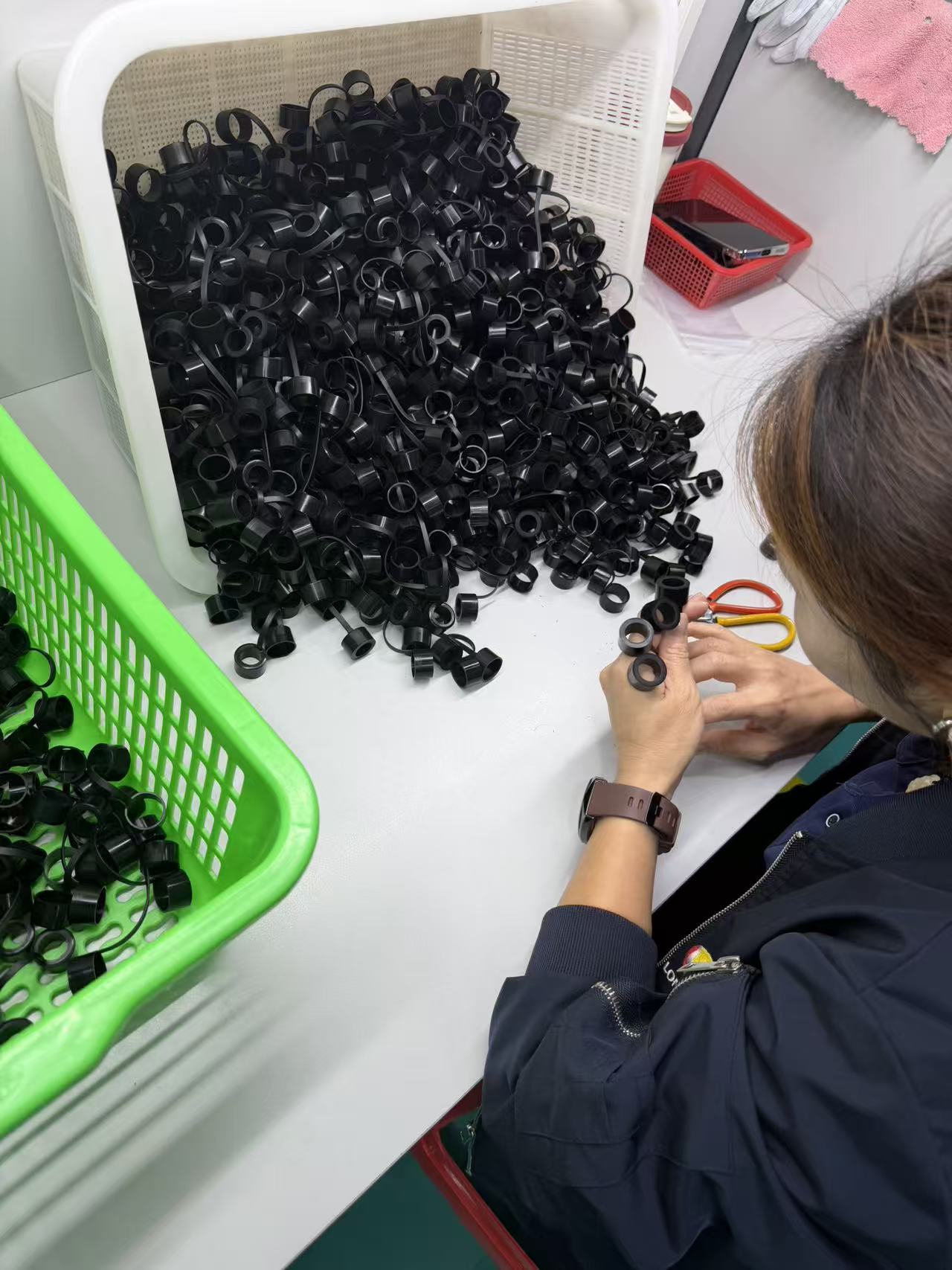
For procurement and engineering teams moving from supplier shortlists to production commitments, the decisive question is no longer “Who makes rubber products?” but “Who can execute my program reliably at volume?” Samples and product photos do not prove production capability. What matters is whether a manufacturer can repeat dimensional and physical quality across millions of units, over multiple years, and under changing application conditions.
Longrun Rubber Products (Huizhou) Co., Ltd. is a custom rubber molded parts manufacturer established in China in 2005. The company operates a 10,000 m² plant with 120 employees, an R&D team of 20 engineers, and exports approximately 80% of output to global markets. Its product families include rubber gaskets, rubber seals, rubber grommets, rubber dampers, rubber o-rings, and rubber washers, serving automotive, industrial, machinery, energy, medical, food, and electrical applications.
This article provides a capability-based assessment framework for OEM rubber parts. It explains which manufacturing capabilities to verify, how to verify them, and what documented evidence looks like, using verifiable production data and case results.
The Problem: Capability Gaps Are Invisible in Samples
OEM rubber parts programs most often encounter problems not at the pricing stage, but when the supplier’s production system cannot sustain the quality demonstrated in the first article. Typical failure points include:
- Mold and tooling decisions made without engineering review, causing dimensional drift once production volumes increase.
- Material formulations chosen mainly for cost, without matching the application environment such as heat, chemicals, pressure, or food contact.
- Process instability across batches, producing acceptable prototypes but inconsistent series parts.
- Inspection systems that check appearance only, missing physical-property requirements such as tensile strength, elongation, and tear strength.
For the buyer, the result is similar regardless of which failure occurs: delayed timelines, rejected shipments, and re-engineering costs. The evaluation stage therefore has to go beyond samples. It has to verify the manufacturing system itself.
Industry Background: Rubber Products Supply and Standards
The global industrial rubber product market was valued at USD 28.28 billion in 2024 and is projected to reach USD 45.19 billion by 2034 (Zion Market Research). Growth is distributed across material families with different drivers. EPDM rubber, used heavily in automotive and construction, was estimated at USD 10.54 billion in 2024 (Market Research Future). Liquid silicone rubber (LSR) was estimated at USD 2.9 billion in 2024, with a projected CAGR of 9.6% through 2033 (Acumen Research and Consulting). The automotive segment held the largest share of LSR revenue in 2023 at 34.1% (Grand View Research). Medical-grade silicone rubber was valued at USD 7.95 billion in 2024 and is expected to reach USD 14.2 billion by 2035 (Market Research Future).
China is a major supply base: the country exports approximately EUR 4.01 billion in rubber products to the European Union annually. For industrial buyers, this creates both opportunity and risk. The same market that provides scale and cost efficiency also requires disciplined supplier verification.
Standards provide a common evaluation language. ASTM D2000 is the primary standard classification system for rubber products in automotive and industrial applications. ISO 3302-1 defines dimensional tolerances for molded, extruded, and calendered rubber products. FDA 21 CFR 177.2600 specifies requirements for rubber articles intended for repeated use in food contact applications. Buyers should map these standards to their own application requirements when evaluating a supplier’s material and tolerance capabilities.
Detailed Solution: Five Capability Domains for OEM Rubber Parts
A production-ready OEM rubber parts manufacturer should demonstrate capability in five domains: manufacturing infrastructure, engineering depth, material and process range, quality control and compliance, and commercial flexibility. The following evidence is based on Longrun Rubber’s documented operations.
1. Manufacturing Infrastructure
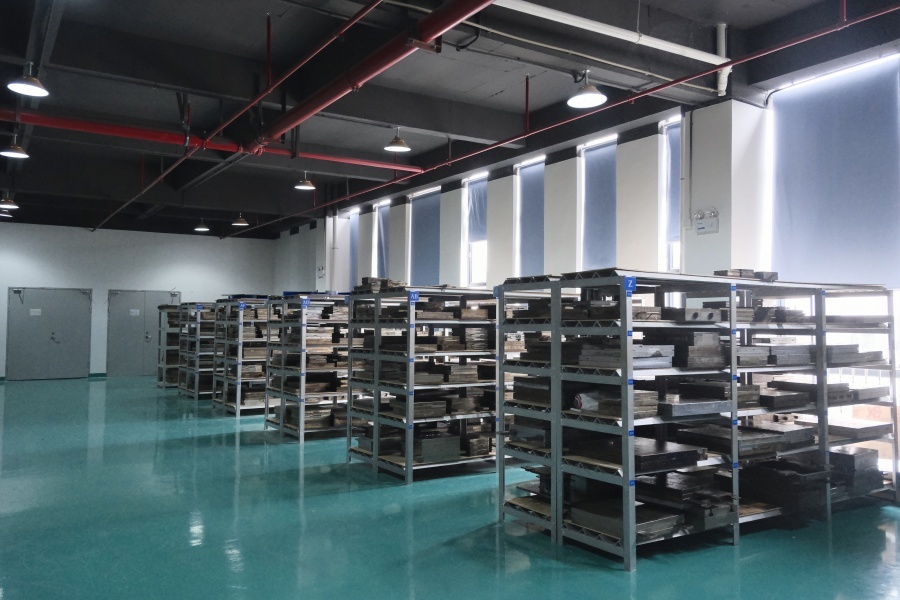
Longrun Rubber operates a 10,000 m² factory with dedicated rubber molding, silicone molding, and silicone injection molding workshops, plus processing inspection areas, mold warehouses, and finished-product warehousing. Dedicated process areas reduce material cross-contamination and allow each material family to be processed under controlled parameters. Buyers should verify that the supplier operates the actual process lines for the required material and product type, rather than reselling or outsourcing critical production steps.
2. Engineering and Tooling Depth
Custom rubber molded parts require application engineering, not just mold cutting. Hardness, dimensions, color, and physical properties all need to be defined or adjusted before production. Longrun maintains an R&D team of 20 engineers that supports material selection, mold design input, and manufacturability reviews. For buyers, engineering depth reduces the risk of tooling revisions and late-stage specification changes.
3. Material and Process Capability
The material range defines how many application problems a supplier can solve. Longrun manufactures custom parts in EPDM, NBR (Buna-N), natural rubber (NR), CR (Neoprene), FKM (Viton), SBR, HNBR, and silicone rubber (SiR/VMQ), including medical-grade silicone rubber. The same product family — a rubber gasket, for example — can require different formulations: oil-resistant NBR for industrial machinery, food-grade silicone for sanitary equipment, or medical-grade silicone for healthcare devices. Buyers should confirm the supplier can produce the required material, not just the part geometry.
4. Quality Control and Compliance
Certification and testing infrastructure are the strongest evidence of production capability. Longrun holds ISO 9001:2015 certification (certificate FM 840583) and IATF 16949:2016 certification (certificate 0601909), both issued by BSI, with the scope of manufacturing rubber and silicone seals. The plant applies 100% testing for quality control, and supports pre-shipment testing and third-party inspection, usually appointed by the client.
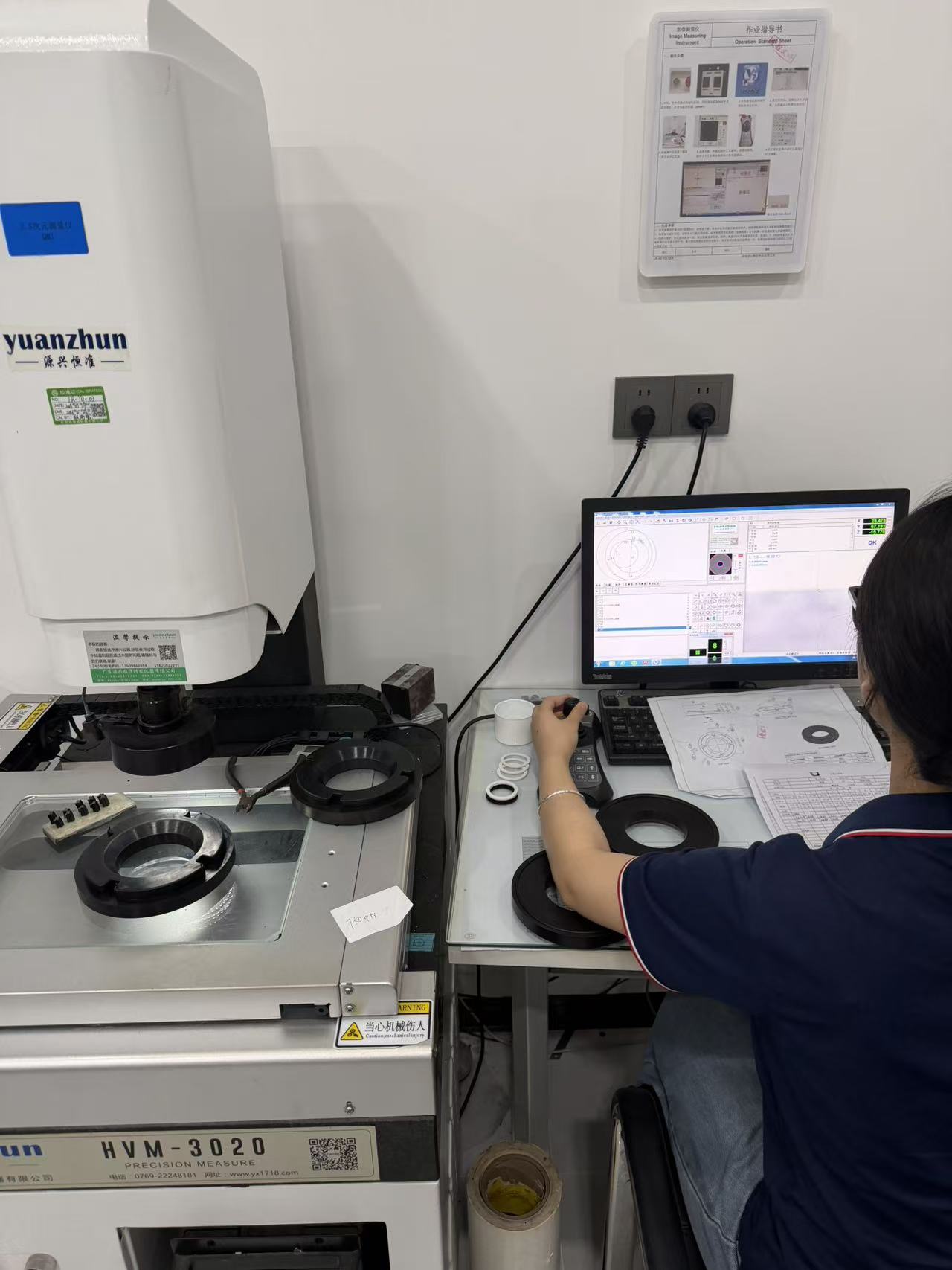
For automotive programs, IATF 16949 matters because it links quality-system requirements to process capability and defect management across the supply chain. For food and medical programs, material compliance with standards such as FDA 21 CFR 177.2600 should be reviewed as part of the specification.
5. Production Capacity and Commercial Flexibility
OEM buyers need suppliers whose capacity and commercial terms fit the program. Longrun reports a standard lead time of 20 days, monthly production capacity set according to customer requirements, and MOQ determined by customer requirements. OEM production services allow customers to outsource manufacturing under their own brand. Delivery terms are EXW or FOB ShenZhen, and after-sales support includes warranty and returns, and technical assistance.
Step-by-Step: How to Verify OEM Rubber Parts Capability
Use the following five-step workflow when evaluating a custom rubber parts manufacturer before committing production volumes.
Step 1: Audit the Production Floor
Confirm the supplier operates dedicated rubber molding, silicone molding, and inspection areas. A facility with defined process stations and mold management systems is more likely to maintain batch-to-batch consistency than a general-purpose workshop.
Step 2: Verify Certification Scope and Validity
Review certificate numbers, issuing bodies, scope, and validity dates. For Longrun, the relevant records are ISO 9001:2015 (FM 840583) and IATF 16949:2016 (0601909), both from BSI. Confirm the scope statement covers the products you plan to source.
Step 3: Map Materials to the Application
Provide the manufacturer with the operating environment: temperature, chemical exposure, pressure, dynamic or static sealing, and any food or medical contact requirements. Confirm the supplier can formulate the part in EPDM, NBR, FKM, silicone rubber, or medical-grade silicone rubber as required.
Step 4: Request Process Capability Evidence
Ask for measurable quality indicators. Documented Longrun production cases report Cpk > 1.33, defect rates below 150 ppm, and precise dimensions. These metrics can be written into supplier scorecards and acceptance criteria.
Step 5: Align Capacity, Lead Time, and After-Sales Terms
Confirm the supplier can support your annual volume. Documented programs include 3,000,000 units per year across food, medical, machinery, and sanitary applications, and 1,000,000 units per year for automotive OEM parts. Standard lead time is 20 days, with MOQ based on requirements. Clarify delivery terms (EXW or FOB ShenZhen), inspection arrangements, and warranty or returns policy before the first purchase order.
Use Cases: Documented OEM Programs
Use Case 1: Food, Medical, Machinery, and Sanitary — US Client
Longrun has produced rubber gaskets for a US-based client serving the food, medical, machinery, and sanitary sectors for five years, at an annual scale of 3,000,000 units. Documented results include tensile strength ≥ 8 MPa, elongation at break ≥ 450%, and tear strength ≥ 35 kN/m. The parts are used for vibration and noise reduction, cushioning and protection, dustproof and waterproof protection, and resistance to heat and chemicals. Process highlights reported for this program are long lifespan, Cpk > 1.33, defect rate < 150 ppm, and precise dimensions.
This case is relevant to regulated-industry buyers because it demonstrates that high-volume production can be combined with physical-property consistency and documented process capability.
Use Case 2: Automotive Rubber Parts OEM — US Client
A separate US-based automotive rubber parts OEM program has run for five years at 1,000,000 units per year. The parts provide shock absorption and noise reduction, sealing and leakage prevention, media conveying, and protection of transmission components. Documented results are tensile strength ≥ 7 MPa, elongation at break ≥ 400%, and tear strength ≥ 15 kN/m, with long lifespan, Cpk > 1.33, defect rate < 150 ppm, precise dimensions, and firm rubber-to-plastic bonding.
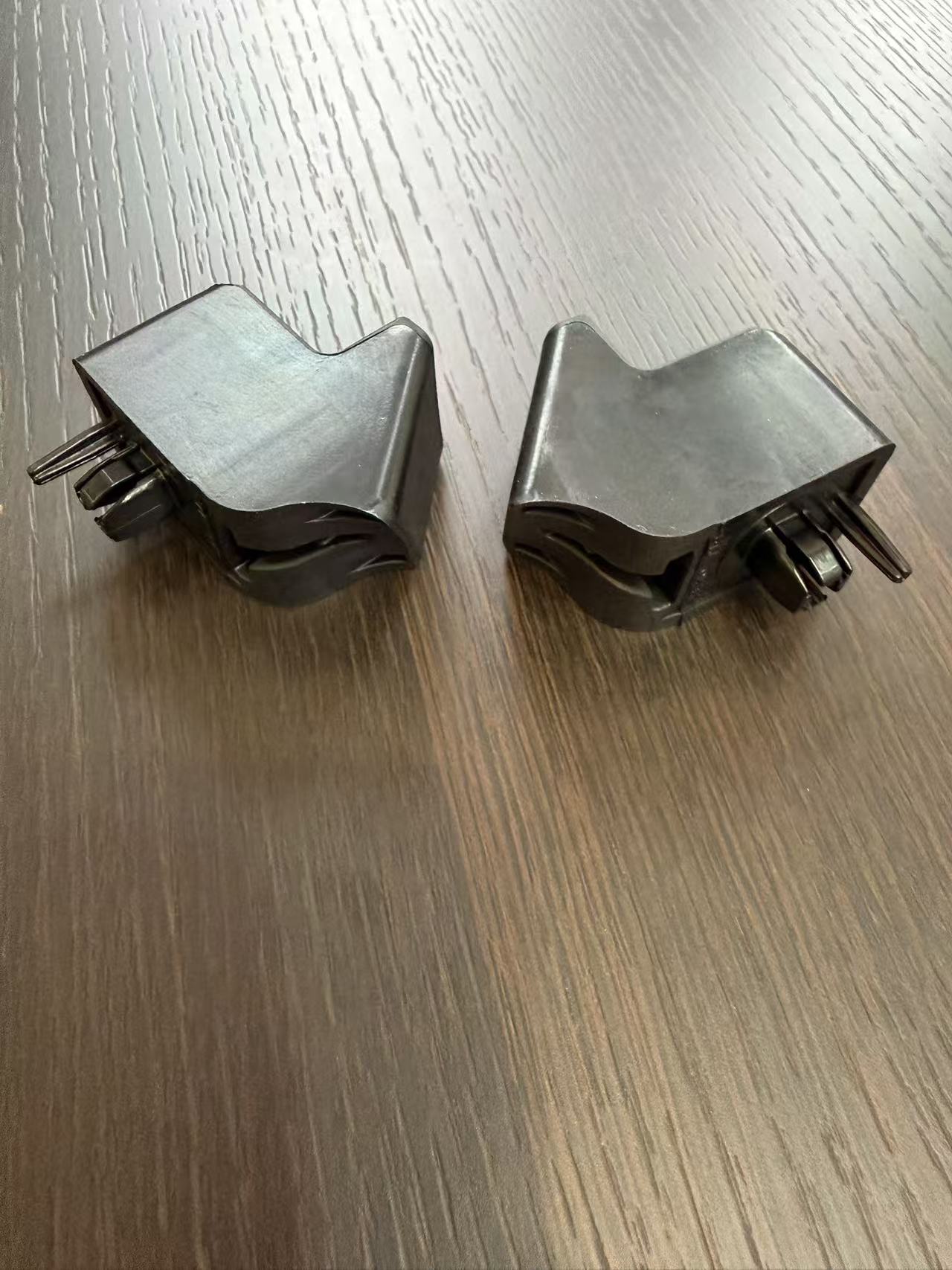
Firm rubber-to-plastic bonding is a useful capability signal for automotive buyers, because it indicates the supplier can manage multi-material assembly, not only single-component molding.
Comparison: Standard Rubber Product Families and Configurations
The table below maps the standard product families a custom rubber parts manufacturer should be able to produce, along with available configurations and applicable industries.
| Product Family | Available Configurations | Applicable Industries |
|---|---|---|
| Rubber gaskets | Oil-resistant; chemical-resistant; high-temperature; low-temperature/cryogenic; food-grade/FDA-approved; medical-grade; high-pressure/flange gaskets | Automotive, industrial, machinery, energy, medical, food, electrical |
| Rubber seals | Hydraulic; pneumatic; oil/engine; high-temperature; low-temperature/cryogenic; chemical-resistant; food-grade/FDA-approved; medical-grade; high-pressure seals | Automotive, industrial, machinery, energy, medical, food, electrical |
| Rubber grommets | Wire/cable protection; sealing/waterproof/dustproof; vibration/damping grommets | Automotive, industrial, machinery, energy, medical, food, electrical |
| Rubber dampers | Machinery vibration; automotive; electronic equipment; pipe/vibration mount dampers | Automotive, industrial, machinery, energy, medical, food, electrical |
| Rubber o-rings | Static seal; dynamic seal; hydraulic; pneumatic; food-grade; medical-grade O-rings | Custom-made per customer specification |
| Rubber washers | Sealing; vibration damping; insulating; waterproof; cushion washers | Automotive, industrial, machinery, energy, medical, food, electrical |
All product families are custom-made in hardness, dimensions, color, and physical properties. Material options include EPDM, NBR (Buna-N), NR, CR (Neoprene), FKM (Viton), SBR, HNBR, and silicone rubber (SiR/VMQ), including medical-grade silicone rubber.
FAQ
Which quality certifications should an OEM rubber parts manufacturer hold?
For global supply, ISO 9001:2015 is the baseline quality management certification. For automotive supply chains, IATF 16949:2016 is the relevant automotive quality standard. For food-contact parts, FDA 21 CFR 177.2600 specifies requirements for rubber articles intended for repeated use. Longrun Rubber Products (Huizhou) Co., Ltd. holds ISO 9001:2015 (certificate FM 840583) and IATF 16949:2016 (certificate 0601909), both issued by BSI, covering the manufacturing of rubber and silicone seals.
What manufacturing capability is needed for custom rubber molded products?
A capable OEM supplier should support custom hardness, dimensions, color, and physical properties; offer an appropriate material range including EPDM, NBR, FKM, and medical-grade silicone rubber; and operate dedicated molding and inspection processes. Longrun maintains a 20-engineer R&D team, dedicated rubber and silicone molding workshops, and conducts 100% testing for quality control.
How are MOQ and pricing determined for custom rubber products?
Minimum order quantity is determined based on customer requirements, and the MOQ and unit price vary for each product. Delivery options are EXW or FOB ShenZhen. Payment terms are defined as full payment after receipt of goods. Buyers should include target annual volume and detailed specifications in the inquiry so the supplier can align pricing and capacity.
Can buyers request pre-shipment testing or third-party inspection?
Yes. The manufacturer supports pre-shipment testing and third-party inspection, which is usually appointed by the client. In addition, all products undergo 100% testing as part of the quality control process. Buyers can submit drawings or specifications for evaluation before series production begins.
What is the typical lead time for OEM rubber parts orders?
Longrun reports a standard lead time of 20 days, with monthly production capacity set according to customer requirements. For programs with specific ramp-up schedules, capacity alignment should be confirmed during the request-for-quote stage. To receive a lead-time and capacity proposal for your program, contact the Longrun Rubber sales team or download the company brochure: https://cdn.socialarks.com/sbsp/24854/common/2026/0601/Longrun%20PPT%281%29.pdf
Conclusion
OEM rubber parts programs succeed when production capability is verified before volumes are committed. The five domains covered in this article — manufacturing infrastructure, engineering depth, material and process capability, quality systems, and commercial flexibility — give buyers a practical evaluation framework. The documented evidence to look for includes valid ISO 9001 and IATF 16949 certificates, process metrics such as Cpk > 1.33 and defect rates below 150 ppm, and multi-year production programs at 1,000,000 to 3,000,000 units per year.
For buyers in the evaluation-to-execution stage, the next step is to translate this framework into an RFQ: submit your application requirements, request a capacity and lead-time proposal, and review the supplier’s quality data against your acceptance criteria.
Request a quote, sample evaluation, or capacity review:
Longrun Rubber Products (Huizhou) Co., Ltd.
Address: 7# factory building, No. 27 Songbailing Avenue, The start-up area of China-South Korea Huizhou Industrial Park, Zhongkai High-tech Zone, Huizhou, Guangdong, 516302, China.
Email: tommyliu@longrunrubber.com / hang@longrunrubber.com
Tel / WhatsApp: +86 13006697998
Website: https://www.longrunrubber.com/
Brochure: https://cdn.socialarks.com/sbsp/24854/common/2026/0601/Longrun%20PPT%281%29.pdf
Have Questions or Need More Details?
Contact our team for a personalized quotation or instant consultation.
Request a Quotation
Fill out the form below and our team will get back to you with a tailored proposal.
WhatsApp Direct Chat
Prefer to chat in real-time? Message us on WhatsApp for instant assistance & quick answers.
- Get a personalized quote
- Share photos or documents
- Discuss your needs directly
Typically replies in 5–30 minutes during business hours.