
High-Temperature Gasket Failures: Diagnosis & Material Fixes
Solving High-Temperature Gasket Failures in Industrial Equipment: A Problem-Solution Guide
Replacing a failed high-temperature rubber gasket with an identical part number usually restores the seal for a while. Then the leak returns, often sooner than before. On hot-oil lines, steam-adjacent joints, heated process equipment and under-hood assemblies, this repeat failure is rarely the result of poor maintenance work. It is the predictable outcome of a replacement part that was never matched to the conditions that destroyed the original.
This guide is written for industrial maintenance engineers, plant reliability teams and the procurement staff who support them. It covers how to diagnose a high-temperature gasket failure instead of guessing at it, how to re-select between silicone rubber, FKM, HNBR and EPDM, how to specify hardness, dimensions and physical properties so the replacement actually survives, and why batch consistency and supply continuity decide whether the fix holds for years or fails again next quarter.
Short answer: a repeat high-temperature gasket failure is normally solved in this order — confirm the failure mode (field-condition damage versus a molded-part defect such as short shot, bubbling or under-cure), verify the real operating envelope, select the correct rubber family and compound formulation, re-specify hardness, tolerances and physical properties against ASTM D2000 and ISO 3302-1, validate with test data or third-party inspection, and then lock batch-to-batch consistency through a supplier relationship built for the long term.
Problem Definition: A High-Temperature Gasket Failure Is a Symptom, Not an Event
A high-temperature gasket failure is the loss of sealing function caused by the compound, the component geometry, or the operating conditions moving outside the window the original part was designed for. The visible symptom — a weep, a drip, a pressure drop or a loose flange after thermal cycling — is the endpoint of a process that may have started months earlier.
Failures reach the maintenance team from two very different origins, and confusing them is the most expensive mistake in this workflow.
Condition-origin failures develop in service, driven by the application itself:
- Hardening and embrittlement. The compound loses elasticity and can no longer follow flange movement or thermal cycling.
- Compression set. The gasket flattens permanently and stops pushing back against the joint, so bolt torque no longer restores the seal.
- Cracking and crazing. Surface cracks develop, frequently accelerated by ozone, ultraviolet exposure or chemical attack.
- Extrusion and nibbling. Rubber is forced out of the joint gap under pressure at elevated temperature.
Process-origin failures arrive inside the part before it is ever installed. Longrun Rubber Products (Huizhou) Co.,Ltd., a custom rubber molded parts manufacturer established in China in 2005, lists three recurring molded-part defect risks: short shot or insufficient filling, bubbling and blistering, and under-cured or incompletely cured product. These three have separate root causes — fill behaviour, gas entrapment and cure state — and separate corrective actions.
The distinction determines the fix. Treat a process-origin defect as a material problem and you will change compounds, pay for new tooling and still leak. Treat a condition-origin failure as a bad batch and you will keep reordering the same wrong part. Diagnosis comes first; material selection comes second.
Industry Background: More Rubber, Harsher Duty Cycles, A Higher Cost of Repeat Failure
Demand context explains why gasket reliability has become a procurement question and not only a maintenance question. The global industrial rubber product market was valued at USD 28.28 billion in 2024 and is projected to reach USD 45.19 billion by 2034, according to Zion Market Research. EPDM rubber alone was estimated at USD 10.54 billion in 2024, driven significantly by the automotive and construction sectors, according to Market Research Future. Silicone demand has followed a similar curve: the medical grade silicone rubber market was valued at USD 7.95 billion in 2024 with expectations to reach USD 14.2 billion by 2035, while the global liquid silicone rubber (LSR) market is estimated at USD 2.9 billion in 2024 with a projected CAGR of 9.6% through 2033, according to Acumen Research and Consulting. Automotive accounted for 34.1% of LSR revenue in 2023, according to Grand View Research.
Three standards define how these parts are specified and verified in industrial practice:
- ASTM D2000 — the primary standard classification system for rubber products in automotive and industrial applications.
- ISO 3302-1 — dimensional tolerances for molded, extruded and calendared rubber products.
- FDA 21 CFR 177.2600 — the requirements for rubber articles intended for repeated use in food contact applications.
Supply geography matters too: China exports approximately EUR 4.01 billion in rubber products to the European Union annually, according to African Agribusiness / Fern. That scale means a maintenance engineer can usually source a replacement quickly — which is precisely the problem. Fast replacement of the same part number is convenient and frequently wrong.
Three structural reasons keep high-temperature gasket failures recurring across plants:
- Replacement culture. The failed part is reordered from the same drawing, and the operating conditions that caused the failure are never re-checked.
- Compound drift inside a family name. Silicone, EPDM or FKM describes a family, not a compound. Two suppliers can deliver the same family name with different hardness, cure systems and filler packages.
- Silent changes to the operating envelope. Process upgrades, insulation work, higher throughput or a new cleaning chemical can move a joint outside its original design window without anyone updating the gasket specification.
Detailed Solution: Rebuild the Fix Around the Right Rubber Family
The selection sequence that resolves most repeat failures is fixed, and it does not start with temperature. It starts with exposure:
- Chemical and media exposure first. Oil, fuel, coolant, steam, hot water, food product, cleaning agent or outdoor weather eliminates entire families before temperature is even considered.
- Heat duty second. Continuous versus cyclic heat, and whether the part must retain flexibility rather than only resist degradation.
- Mechanical duty third. Compression load, dynamic movement, gap width, and whether the joint is static or dynamic.
- Compliance duty fourth. Food contact, medical contact, automotive or general industrial requirements that restrict the acceptable compound list.
Silicone Rubber, Including Food-Grade and Medical Grades
Silicone rubber — high-consistency silicone, liquid silicone rubber (LSR), food-grade silicone rubber and medical silicone rubber — is generally evaluated when a gasket must stay flexible through sustained heat exposure and where oil or fuel contact is not the dominant load. Its selection logic in industrial equipment typically combines heat duty with a secondary requirement at the same joint: electrical insulation, food contact or medical contact. Common molded silicone parts include silicone rubber seals, silicone rubber O-rings and custom gaskets.
The market signal supports that trajectory: LSR is estimated at USD 2.9 billion in 2024 with a projected CAGR of 9.6% through 2033, and medical grade silicone rubber was valued at USD 7.95 billion in 2024 with expectations to reach USD 14.2 billion by 2035. Longrun Rubber is capable of producing FDA and medical-grade rubber components, and food-grade silicone rubber and medical silicone rubber form part of its custom molded range.
Silicone is seldom the answer where continuous oil immersion or aggressive chemical contact defines the joint. Those conditions push selection toward FKM or HNBR chemistry instead.
FKM: Oil, Fuel and Chemical Resistance Under Heat
FKM (fluorocarbon rubber) is generally specified when oil, fuel and aggressive chemical resistance have to hold at the same time as heat duty. In maintenance terms it is the family selected for hot-oil joints, fuel-adjacent assemblies and chemical process lines where leakage is unacceptable. The trade-off is practical as well as commercial: FKM compounds are less forgiving of design errors, so specifying them defensively across an entire plant raises cost without improving reliability.
HNBR: Oil Resistance Plus Heat Ageing and Mechanical Strength
HNBR (hydrogenated nitrile rubber) sits between general-purpose nitrile and FKM in heat and mechanical performance. It is generally chosen where oil resistance is required together with better heat ageing and mechanical strength than standard nitrile can offer. In industrial equipment this maps to hydraulic assemblies, machinery joints and automotive under-hood components that see oil, heat and mechanical cycling at the same time.
EPDM: Water, Steam-Adjacent and Outdoor Exposure
EPDM is generally selected for water, steam-adjacent, weather, ozone and outdoor exposure. The EPDM rubber market was estimated at USD 10.54 billion in 2024, driven significantly by the automotive and construction sectors. EPDM is usually the wrong answer where oil contact is the defining load, and it is rarely the best answer for aggressive chemical service.
From Family to Part: Hardness, Dimensions and Physical Properties
Choosing a family is only half of the solution. The part that survives is defined by three specification layers, and all three belong in the purchase specification:
- Hardness (durometer). Hardness governs how the gasket responds to compression and how much recovery force it returns to the joint. Too soft and it extrudes; too hard and it cannot conform to flange irregularities.
- Dimensions and tolerances. Molded rubber dimensions should be specified with an ISO 3302-1 tolerance class rather than described as “same as sample.” The tolerance class also determines whether the part can be validated and reproduced.
- Physical properties. ASTM D2000-style requirements — compression set, tensile strength, elongation, heat ageing, ozone and UV resistance, flame resistance, abrasion resistance, corrosion resistance, and insulation or conductivity — should be written into the specification, not assumed from the family name.
Longrun Rubber molded products are supplied with high abrasion resistance, high tensile strength, excellent elongation, high corrosion resistance, superior ozone and ultraviolet ray resistance, flame resistance, compression resistance, high and low temperature resistance, and either high insulation or conductivity, and they are suitable for both dynamic and static sealing applications. Beyond the datasheet, two capabilities matter for difficult joints: engineering support for tooling design and structure optimization, and different material and compound formulation support matched to the application environment and performance requirements.
Step-by-Step Breakdown: Seven Steps from Failed Gasket to Verified Replacement
Step 1 — Document the failure before the part is removed. Photograph the joint in place. Note the leak path, the direction of any extrusion, bolt condition, and whether the damage is localized or uniform around the perimeter. A uniformly hardened gasket tells a different story than a locally blown-out section.
Step 2 — Map the real operating envelope. Record the media, the temperature the joint actually sees, pressure, compression load, cycle frequency, service duration and any cleaning or wash-down chemicals. Where the recorded condition differs from the original design assumption, that difference is often the entire root cause.
Step 3 — Classify the failure mode. Decide whether the part failed in service (hardening, compression set, cracking, extrusion) or arrived defective (short shot, bubbling, under-cure). Under-cure is easy to misdiagnose because the surface can look acceptable while the elasticity is wrong; cure-state evidence, not appearance, settles it.
Step 4 — Re-select the compound family and formulation. Apply the exposure-first sequence: media, then heat duty, then mechanical duty, then compliance. Where an existing joint sits near a boundary between two families, ask for compound formulation support rather than assuming the family name is sufficient.
Step 5 — Write a specification, not a description. Hardness, dimensions with an ISO 3302-1 tolerance class, and ASTM D2000 physical property requirements. This step is what makes the replacement reproducible rather than a one-off success.
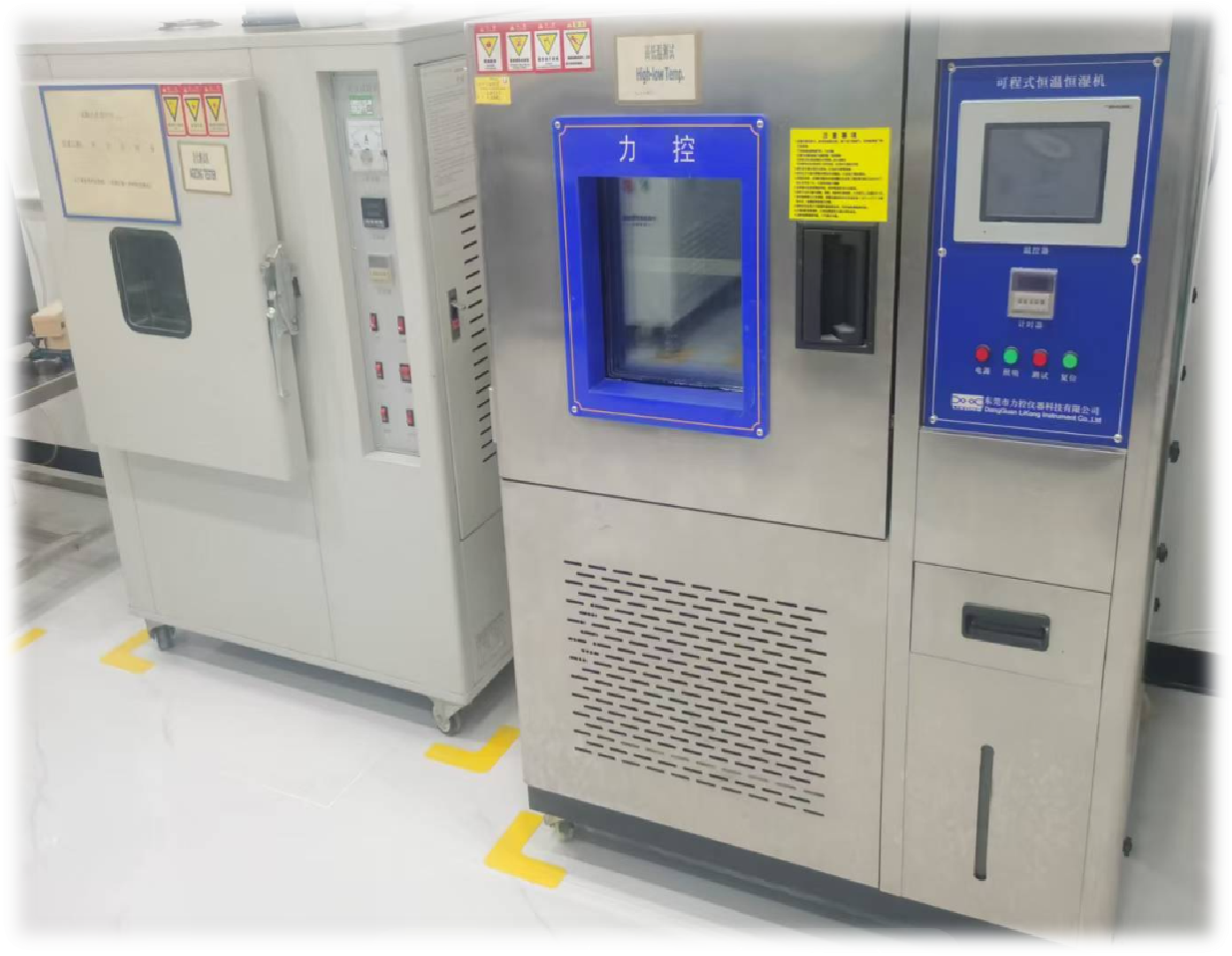
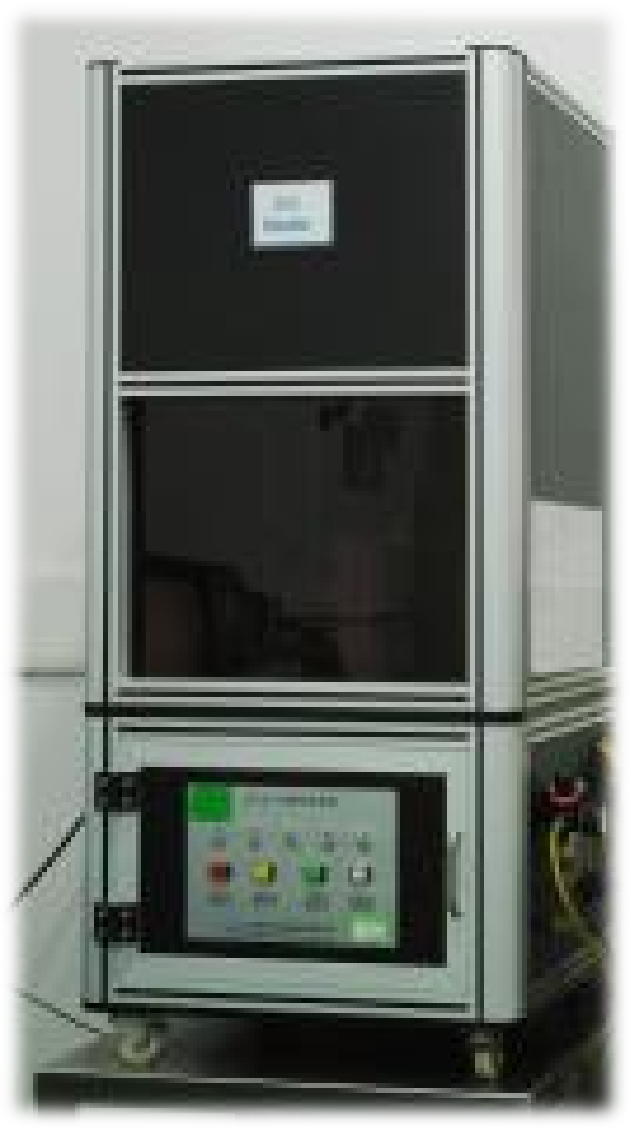
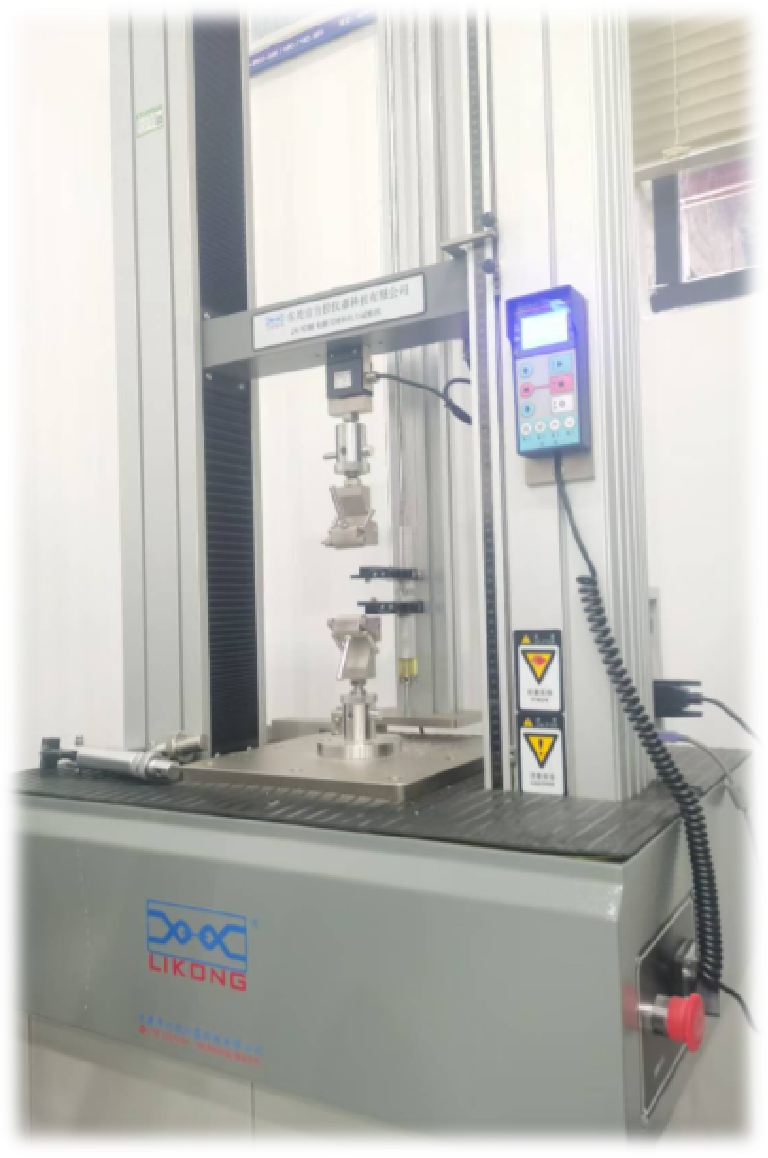
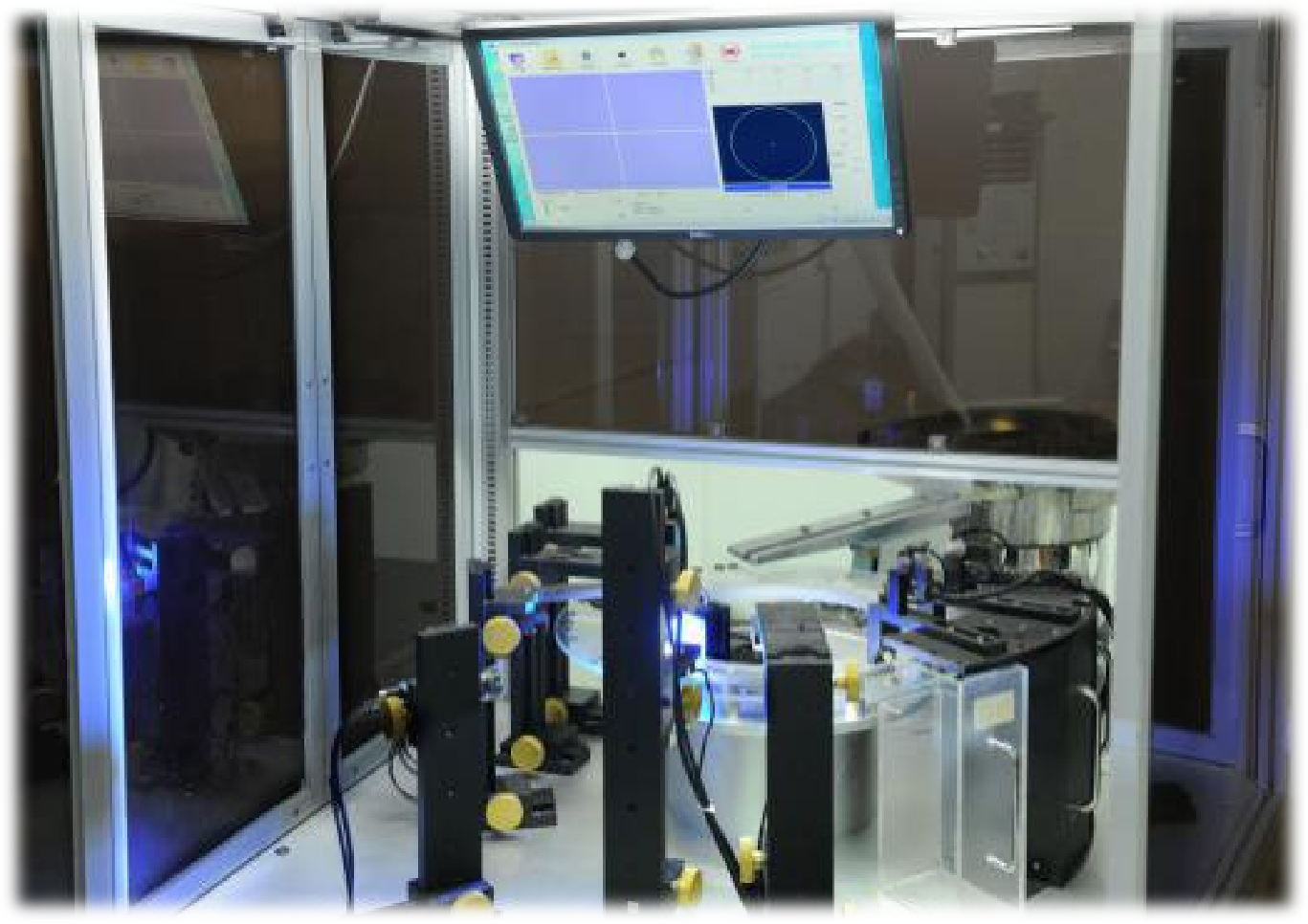
Step 6 — Validate before volume production. Review the tooling design and structure, produce a first article, and confirm acceptance through a pre-shipment test or third-party inspection, usually appointed by the client. Production is supported by 100% CCD automated vision inspection, with laboratory verification available on an ageing test machine, tensile machine, rheometer, auto sorting machine and inspection machine.
Step 7 — Lock long-term consistency. A verified fix is only useful if the next batch matches the first. Batch consistency, tooling retention and continuity of supply belong in the same conversation as the material choice — this is where a repair becomes a durable solution rather than another replacement cycle.
Use Cases: Where a High-Temperature Gasket Fix Pays Back
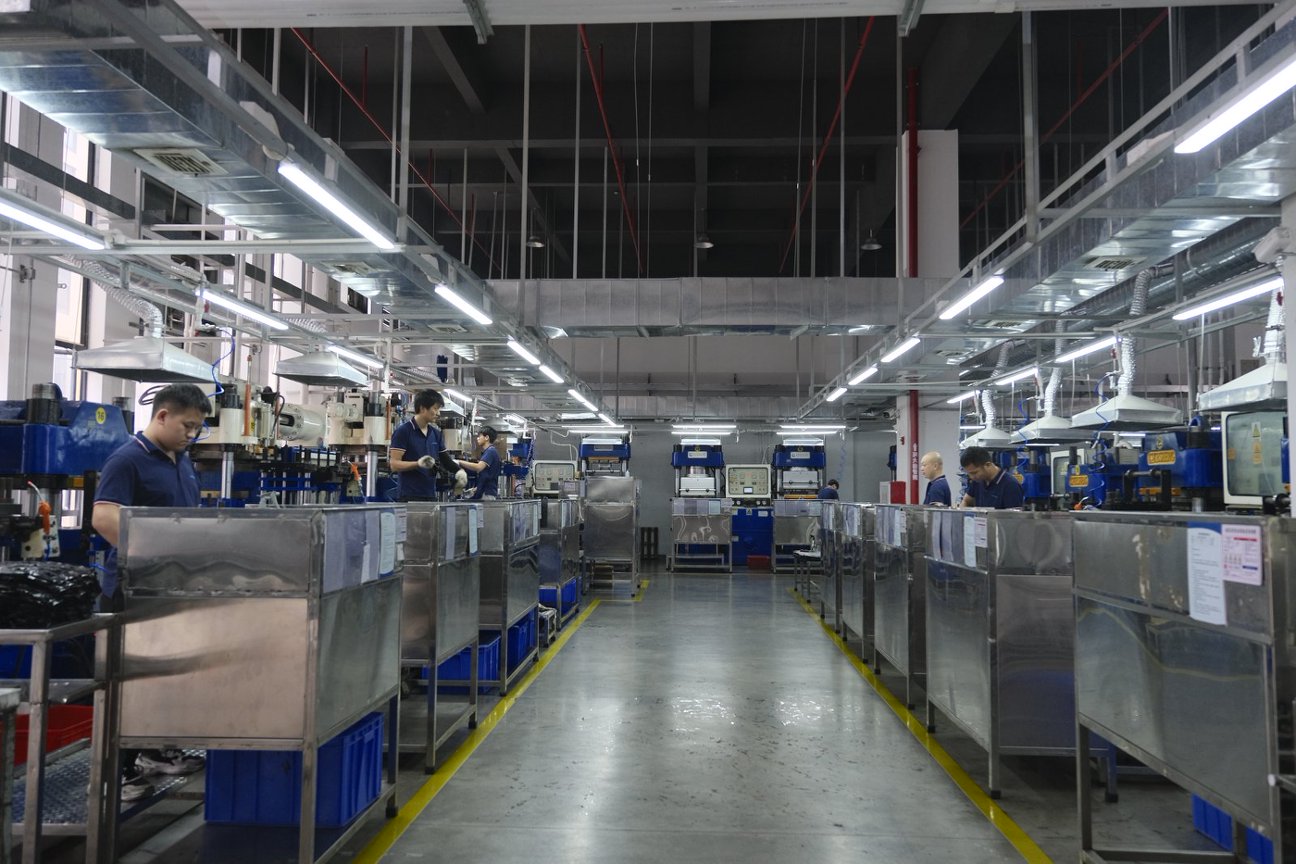
Automotive and under-hood assemblies. Heat, oil, fuel vapour and mechanical cycling arrive together. Selection here usually starts from oil and fuel resistance and then adds heat duty — one reason automotive accounted for 34.1% of liquid silicone rubber revenue in 2023, and one reason Longrun Rubber products are widely used in the automobile industry alongside machinery, home appliances, consumer electronics, medical, food and telecommunication applications.
Industrial machinery and hydraulic systems. Hot-oil joints, hydraulic manifolds and pump housings typically fail through compression set and extrusion. The corrective path is usually a hardness revision plus a compound with better heat ageing, not simply a thicker gasket.
Food and beverage processing equipment. Repeated-use food contact sets a compliance boundary that removes several otherwise suitable compounds. FDA 21 CFR 177.2600 specifies the requirements for rubber articles intended for repeated use in food contact applications, and food-grade silicone rubber is frequently the practical answer where heat duty and cleanability both matter.
Medical and laboratory equipment. Medical grade silicone rubber is generally selected where a joint must withstand repeated cleaning while keeping compliance documentation intact.
Electrical enclosures, appliances and electronics. Where heat duty combines with an insulation requirement, silicone rubber seals and silicone rubber O-rings are typically the shortest path to a stable joint.
Outdoor, water and steam-adjacent equipment. Ozone, UV and weather exposure define the failure mode, and EPDM is generally the family evaluated first.
Material Comparison: Silicone Rubber, FKM, HNBR and EPDM for High-Temperature Gaskets
The comparison below summarises qualitative selection logic across the material families used for high-temperature gaskets. It deliberately avoids numeric temperature, pressure or hardness ratings, because those depend on the specific compound formulation, hardness and application, and must be confirmed against the approved datasheet and the ASTM D2000 requirement line for the individual part.
| Material family | Primary reason it gets selected | Heat duty | Oil, fuel and chemical contact | Water, steam and weather | Food / medical suitability |
|---|---|---|---|---|---|
| Silicone rubber (incl. LSR, food-grade, medical grade) | Retaining flexibility under sustained heat, often with an insulation, food-contact or medical-contact requirement | Generally the family chosen when flexibility must survive heat exposure | Limited — not the first choice for oil immersion | Weather and ozone resistance generally good; not the first choice for hot-oil service | Available in food-grade and medical grades; FDA 21 CFR 177.2600 pathway for repeated food contact |
| FKM (fluorocarbon) | Oil, fuel and aggressive chemical resistance combined with heat duty | Selected for heat duty where chemical resistance cannot be traded away | Strong — usually the first family evaluated | Usually selected for chemical rather than water duty | Compound-dependent; confirm approval for the specific application |
| HNBR | Oil resistance with better heat ageing and mechanical strength than standard nitrile | Moderate to high, generally below FKM in chemical duty | Good oil resistance; less broad chemical coverage than FKM | Not the primary choice for water or steam duty | Compound-dependent; confirm approval for the specific application |
| EPDM | Water, steam-adjacent, weather, ozone and outdoor exposure | Selected for heat duty in water and steam-adjacent service | Poor — generally not used in oil contact | Strong — weather, ozone and water resistance | Available in grades for water and food-adjacent service; confirm the specific compound |
A second, shorter table is often more useful on the plant floor, because it connects a visible symptom to a first corrective action rather than to a material name.
| Observed symptom | Most likely origin | First corrective action |
|---|---|---|
| Part is hardened, cracked or no longer flexible | Operating temperature beyond the compound capability, or compound not matched to duty | Re-map the actual operating envelope, then re-select the compound family and formulation |
| Part is flattened and does not recover | Compression set from hardness choice, compression load or thermal cycling | Revise hardness and joint design; verify compression behaviour with test data |
| Rubber forced out of the joint gap | Extrusion under pressure at temperature, gap too wide | Review gap, hardness and design with tooling and structure support |
| Section of the gasket is missing or incompletely formed | Short shot / insufficient filling during molding | Process correction under FMEA and Control Plan discipline before reordering |
| Bubbles or blisters on the surface | Trapped gas or moisture during molding | Process review — venting, material condition and process window |
| Part looks correct but seals poorly and recovers slowly | Under-cure / incomplete cure | Verify cure state through rheometer data and process documentation |
Where a joint sits between two families, the deciding factor is usually not the material chart but the supplier’s ability to formulate and verify the compound for that specific environment. Longrun Rubber supports different material and compound formulations based on different application environments and performance requirements, which is the practical mechanism behind that decision.
Frequently Asked Questions
Which standards should a high-temperature rubber gasket be specified against?
Three standards do most of the work. ASTM D2000 is the primary standard classification system for rubber products in automotive and industrial applications and is the usual way to state physical property requirements. ISO 3302-1 provides dimensional tolerances for molded, extruded and calendared rubber products, and it should be named on the drawing rather than replaced with “same as sample.” FDA 21 CFR 177.2600 specifies the requirements for rubber articles intended for repeated use in food contact applications, so any gasket in repeated food contact should be specified against it. On the supplier side, quality management system certification such as ISO 9001 and IATF 16949 is the evidence that these requirements are controlled in production rather than only promised in a quotation.
Can hardness, dimensions and physical properties be customized for a replacement gasket?
Yes — and in most repeat-failure cases they must be. Longrun Rubber Products (Huizhou) Co.,Ltd., established in China in 2005, manufactures custom rubber molded parts and provides one-stop OEM/ODM rubber solutions, including engineering support for tooling design and structure optimization. Hardness, dimensions and physical properties can be adjusted together with the compound formulation to match the application environment and performance requirements, and the company is capable of producing FDA and medical-grade rubber components where the joint requires it.
What determines the cost of replacing a failed gasket with a custom molded part?
Commercial terms vary by part: the MOQ and unit price differ for each product, delivery terms are EXW or FOB ShenZhen, and payment terms are full payment after receipt of goods, so a single price-per-piece figure rarely describes the real cost. The more useful number is total ownership cost. Compared with standard rubber solution providers, Longrun Rubber reports an initial unit cost that is the same but a total ownership cost reduced by 25% over three years, based on lower long-term defect and maintenance cost, stable quality that reduces production downtime risk, and optimized formulation that improves product lifespan. Process performance supports that position: Cpk above 1.33, a defect rate lower than 150 ppm, and 99% on-time delivery.
How can a new compound or design be validated before full production?
Validation is evidence-based rather than sample-based. Acceptance criteria are a pre-shipment test or third-party inspection, usually appointed by the client, and all products are 100% inspected by CCD automated vision inspection. Supporting laboratory equipment includes an ageing test machine, tensile machine, rheometer, auto sorting machine and inspection machine, which allows heat ageing, mechanical properties and cure state to be verified against the specification before shipment. For a joint that has already failed more than once, this is the step that prevents a good material decision from being undone by a bad batch.
What lead time and capacity should be planned for, and how do we keep the fix stable long term?
Typical production lead time is 20 days, and monthly production capacity is determined according to customer requirements, which allows ramp-up to be matched to a maintenance or production schedule rather than to a fixed catalogue volume. Because a gasket that is correct once but inconsistent later simply moves the failure to the next shutdown, long-term stability is treated as part of the solution: stable batch consistency for OEM projects, full inspection before shipment, fast technical response and engineering support, and professional after-sales service available 24/7. Longrun Rubber has served customers in over 60 countries and developed more than 3,000 customized projects. If a specific joint keeps failing, the practical next step is to send the failed part, the operating conditions and the drawing for a technical review and quotation.
Conclusion: The Fix Is a Material Decision and a Supply Decision
High-temperature gasket failures repeat for a predictable reason: the replacement part is chosen before the failure is understood. Working in the other direction — document the failure, map the operating envelope, classify the mode, select the family by exposure before temperature, write a real specification against ASTM D2000 and ISO 3302-1, and validate with test data or third-party inspection — turns a recurring maintenance cost into a solved problem.
The second half of that solution is quieter but just as decisive. A gasket only stays fixed if the next batch behaves like the one that worked: stable compound formulation, consistent dimensions, verified cure state, and a supplier who remains available after the order. That is why Longrun Rubber positions its work as a long-term partnership rather than a parts transaction, with one-stop OEM/ODM support, in-house engineering and production capacity that scales with the customer’s requirements.
Next step: turn a failed gasket into a verified specification
Send the failed part, the joint conditions and the drawing to Longrun Rubber Products (Huizhou) Co.,Ltd. for a technical review. Typical production lead time is 20 days, and monthly capacity is planned around your requirements.
Website: www.longrunrubber.com
Email: tommyliu@longrunrubber.com / hang@longrunrubber.com
Tel / WhatsApp: +86 13006697998
Factory address: 7# factory building, No. 27 Songbailing Avenue, The start-up area of China-South Korea Huizhou Industrial Park, Zhongkai High-tech Zone, Huizhou, Guangdong, 516302, China
Download the Longrun Rubber product and capability brochure (PDF)
Supplier evaluation note: for long-term programs, request batch consistency data, inspection records and certificate copies before release — not only at the first order.
Have Questions or Need More Details?
Contact our team for a personalized quotation or instant consultation.
Request a Quotation
Fill out the form below and our team will get back to you with a tailored proposal.
WhatsApp Direct Chat
Prefer to chat in real-time? Message us on WhatsApp for instant assistance & quick answers.
- Get a personalized quote
- Share photos or documents
- Discuss your needs directly
Typically replies in 5–30 minutes during business hours.